Your Wedding Dress Timeline: When to Start Shopping in St. Petersburg
“When should I start looking for my wedding dress?” It’s one of the first questions newly engaged brides ask, usually while they’re still staring at their ring in disbelief and wondering how they’re supposed to plan an entire wedding. The answer matters more than you might think, but it’s also more flexible than the bridal industry sometimes makes it seem. At The Dressing Room St. Petersburg, we help brides understand the perfect timeline for finding their dress – without the panic or the pressure.

The Conversation Nobody Has With You
Here’s what usually happens: you get engaged, you’re floating on cloud nine, and then someone – maybe a well-meaning friend, maybe a bridal magazine, maybe your mom who’s already in full planning mode – tells you that you need to start shopping for your dress immediately because it takes FOREVER and you’re already behind schedule and oh my goodness what if you can’t find anything in time?
Deep breath. Let’s talk about reality instead of panic.
The wedding industry has created this sense of urgency around dress shopping that isn’t always warranted. Yes, there are timelines to consider. Yes, dresses take time to produce and alter. But no, you don’t need to rush into shopping before you’re ready, and no, you’re probably not behind schedule even if you think you are.
Understanding Why Timelines Exist
Before we talk about when you should shop, let’s understand why timing matters at all. Wedding dresses aren’t sitting in warehouses waiting for you to order them. When you say “yes” to a dress, here’s what actually happens.
The dress is made specifically for you. Most wedding dresses are produced to order, meaning the designer or manufacturer creates your dress after you purchase it. This isn’t like buying a dress off a rack at a department store. Your dress is cut, sewn, detailed, and finished specifically for your order. This production process typically takes anywhere from two to six months, depending on the designer, the complexity of the dress, and the time of year. Some designers are faster, some slower. Some styles are more complex and take longer to produce.
Then there’s the shipping and receiving timeline. Once your dress is produced, it needs to be shipped to the boutique. This usually adds a few weeks to the timeline, and occasionally things get delayed in shipping. It’s rare, but it happens, which is why we build in buffer time.
Alterations typically take two to three months from your first fitting to your final pickup. This includes multiple fittings, the actual alteration work, and time for any adjustments after fittings. Rush alterations are possible but expensive and stressful, so it’s better to avoid them if you can.
When you add all this up – production, shipping, and alterations – you’re looking at a total timeline of about six to nine months from the day you order your dress to the day you pick it up, perfectly fitted and ready for your wedding. This is why the bridal industry suggests shopping eight to twelve months before your wedding. It’s not arbitrary. It’s based on the realistic timeline of getting your dress made and fitted.
But Here’s the Truth: Every Bride’s Timeline is Different
The eight to twelve month guideline is useful as a general framework, but your actual ideal timeline depends on several factors that are unique to you and your situation.
If you’re planning a long engagement, you have the luxury of time. Some couples get engaged and plan a two-year engagement because they want time to save money, because they’re finishing school, because they want a specific venue that’s booked far out, or simply because they’re not in a rush. If this is you, don’t feel pressured to shop for your dress a year and a half before your wedding. That’s actually too early for most brides. Your style might change, your body might change, and you’re making a decision for a wedding that feels impossibly far away.
On the other hand, if you’re planning a shorter engagement – six months, four months, even two months – you’re working with different constraints. You need to move faster, be more decisive, and potentially look at off-the-rack options. This doesn’t mean you can’t find a beautiful dress. It just means your approach needs to be different.
Your decision-making style also matters. Some brides walk into their first appointment, try on three dresses, and know immediately which one is theirs. They’re decisive, confident, and ready to commit. Other brides need time to think, to compare, to sit with their decision before they’re ready to say yes. Neither approach is wrong, but they require different timelines. If you know you’re someone who needs time to process decisions, build that into your shopping timeline.
The Sweet Spot: Nine to Twelve Months Out
For most brides planning traditional timeline weddings, shopping nine to twelve months before your wedding date is ideal. This window gives you enough time for everything to happen comfortably without feeling rushed, but it’s not so far out that you’re shopping before you have a clear vision of your wedding.
At this point in your planning, you’ve usually booked your venue, which means you know the season, the setting, and the general vibe of your wedding. You have a sense of your color palette, your style, whether you’re going formal or casual, indoor or outdoor. This context is incredibly helpful when you’re trying on dresses because you can actually envision how each dress will work for your specific wedding.
Shopping in this window also means you’re not competing with the absolute peak shopping season. The busiest times at bridal boutiques are typically January through March, when newly engaged couples from the holiday season are all shopping at once. If you can shop outside this window, you often have more availability for appointments and slightly less pressure on alteration schedules.
The nine to twelve month timeline also allows for comfortable alteration scheduling. You’re not rushing your seamstress or paying premium rates for expedited work. You have time for three proper fittings, time to address any unexpected issues, and time to not feel panicked if something needs to be adjusted after a fitting.
Perhaps most importantly, shopping in this window means you can take your time making a decision without stress. If you need to think about a dress overnight, or even for a week, you can do that. If you want to visit two or three boutiques before deciding, you have time for that. You’re not forced into an immediate decision because of timeline pressure.
Shopping Six to Nine Months Out: Still Comfortable
Maybe you’ve been busy, or maybe you needed time to save for your dress budget, or maybe you just weren’t ready to think about dresses until now. Shopping six to nine months before your wedding is still very workable, and honestly, most of our brides at The Dressing Room fall into this window.
By this point, you’re deep into wedding planning. Your vision is crystal clear. You know exactly what you want because you’ve been thinking about it for months. This clarity actually makes dress shopping more efficient. You’re not trying on random styles to see what you like. You come in with a specific vision, and we can focus on finding dresses that match that vision.
The production and alteration timelines still work comfortably in this window. You’re not cutting it close or requiring rush fees. Designers can produce your dress on their normal schedule, and alterations can happen without anyone feeling stressed about deadlines.
The main difference between shopping at nine to twelve months versus six to nine months is simply that you have slightly less room for indecision. If you’re shopping nine months out and you need two weeks to think about a dress, no problem. If you’re shopping six months out, you probably want to make your decision more quickly just to keep everything on track. But this isn’t panic-inducing pressure. It’s just being thoughtfully decisive.
Three to Six Months: Getting Tighter, But Manageable
Life happens. Maybe you’ve been dealing with work stress, family issues, or health concerns that pushed dress shopping down your priority list. Maybe you changed your mind about your original dress and need to start over. Maybe your wedding plans changed and suddenly you have a shorter timeline. Whatever the reason, if you’re shopping three to six months before your wedding, you can absolutely still find your dress.
This is where our conversation becomes more honest and practical. At this timeline, we’re likely looking at rush orders, which often come with additional fees. Designers charge more to move your dress to the front of their production queue. It’s not exorbitant, but it’s an extra cost to factor into your budget. We’ll be upfront about these costs so there are no surprises.
Your designer and style options might be somewhat more limited at this point. Some designers simply cannot produce dresses in under four months. It’s not that they won’t – they literally can’t because of how their production process works. So we focus on designers we know can work within your timeline, which still gives you plenty of beautiful options, just not every single designer in our collection.
Alterations will be on a tighter schedule. Instead of leisurely spaced fittings over several months, we’re compressing that timeline. Your seamstress will still do beautiful work, but you’ll need to be very responsive to scheduling fittings and you’ll have less flexibility if something in your life conflicts with a fitting date.
The key to making this timeline work is being decision-ready when you come for your appointment. This isn’t the time to casually browse or try on dresses just to see what’s out there. You need to come prepared to make a decision if you find something you love. The private appointment setting at The Dressing Room actually helps with this because you can focus intensely on finding your dress without distractions or the chaos of a crowded boutique.
Under Three Months: Let’s Talk About Reality and Solutions
If you’re getting married in under three months and you haven’t found your dress yet, you’re probably feeling some anxiety. That’s understandable. But here’s the good news: we can still help you find something beautiful. The approach just needs to be different.
At this timeline, off-the-rack becomes your primary focus. Off-the-rack doesn’t mean second-rate or picked-over options. It means dresses that are already produced and available for immediate purchase. At The Dressing Room, we carry beautiful off-the-rack options that can be yours to take home after your appointment. These dresses still need alterations, but you’re cutting out the entire production and shipping timeline, which is what gives you back those precious weeks.
If you absolutely must order a new dress with less than three months to go, rush fees will definitely apply, and we’ll be very clear about what’s realistically possible. Some designers can rush production in six to eight weeks. Others simply cannot. We’ll work with you to understand what’s possible and what’s not, and we’ll focus on solutions rather than problems.
The important thing is to contact us immediately. The sooner we start working on your situation, the more options we have. Every week matters when you’re working with a short timeline. Don’t wait another day thinking you’ll deal with it next week. Deal with it now.
The “Just Engaged” Timeline: What to Do First
You just got engaged. Congratulations! Your ring is gorgeous, you’re telling everyone your news, and people are immediately asking about your wedding plans. You probably have no idea when or where you’re getting married, but everyone wants to know everything right now.
Here’s what you should actually do in those first months after getting engaged, at least as far as your wedding dress is concerned. For the first month or two, just enjoy being engaged. Seriously. This is a special time, and you don’t need to immediately launch into wedding planning mode. Talk with your partner about what kind of wedding you both want. Dream together. Start getting a sense of your vision without feeling pressured to make any decisions yet.
Around month two or three after your engagement, start getting practical. Book your venue if you can, because this often determines your date and season, which affects everything else. Start thinking about your overall budget and how much you can allocate to your dress. Create Pinterest boards if that’s your thing, but don’t obsess over them. Just start getting a sense of styles you’re drawn to.
By month three or four, assuming you’re planning a traditional timeline wedding about a year out, you can start scheduling dress shopping appointments. But even here, don’t feel like you need to shop at ten different boutiques. At The Dressing Room, our private appointment setting and expert stylists mean many brides find their dress at their first appointment. Quality over quantity.
When You Should Actually Wait to Shop
Sometimes the right advice is to wait a bit before shopping, even if you’re within the traditional timeline. If you haven’t set your date or booked your venue yet, it’s hard to know what dress will work for your wedding. A ballgown that’s perfect for a formal indoor winter wedding isn’t right for a casual outdoor summer celebration. Wait until you have this basic context.
If you’re currently in the middle of intentional weight changes – whether you’re working on losing weight, gaining weight, or building muscle – it’s usually better to wait until you’re closer to your goal. Wedding dresses are fitted very precisely, and significant body changes mean your dress might not fit properly when your wedding arrives. Most stylists recommend ordering your dress when you’re within five to ten pounds of where you expect to be on your wedding day.
If your life is currently chaotic – you’re moving, changing jobs, dealing with family health issues, or managing other major stressors – dress shopping might not be the right priority right now. Wedding planning should be exciting, not another source of stress. It’s okay to table dress shopping until you have the mental and emotional space to enjoy the experience.
If your budget isn’t ready, wait. There’s no point in falling in love with dresses you can’t afford. Take time to save, to get clear on what you can spend, to have honest conversations with your partner or family about who’s contributing what. Shop when you’re financially ready to say yes if you find the right dress.
Special Timeline Considerations for Tampa Bay Brides
If you’re planning a Tampa Bay area wedding, there are some local factors that might influence your dress shopping timeline. Florida’s peak wedding season runs from October through April, when the weather is beautiful and outdoor celebrations are perfect. If you’re getting married during these months, you’re sharing alteration schedules with many other brides, so building in a little extra time is smart.
Summer weddings in Florida, from May through September, actually have less competition for alteration appointments because fewer brides choose the hot, humid summer months. If you’re a summer bride, you might have slightly more flexibility with your timeline.
Hurricane season, which officially runs from June through November, is something to keep in mind. It rarely affects wedding dress shopping directly, but if there’s a major hurricane, it could potentially delay shipments or affect appointment availability. It’s not a reason to panic, just something to be aware of if you’re working with a tighter timeline.
The type of venue you choose also affects dress considerations. Beach weddings require specific dress features – lighter fabrics, appropriate trains, styles that work in wind and sand. Indoor ballroom weddings allow for heavier, more structured gowns. If you know your venue type early, it helps you shop more efficiently because we can focus on dresses that actually work for your setting.
Understanding the Payment Timeline and How It Affects When to Shop
At The Dressing Room, we require payment in full before ordering your dress. This is standard in the bridal industry, but it’s important to understand how it affects your timeline. If you need time to save for your dress, you need to factor that into when you start shopping.
Here’s how this works practically. If your dress budget is $2,000 and you need to save for it, don’t wait until six months before your wedding to start shopping if you’re still saving. Instead, start shopping earlier – maybe nine or ten months out – so you have time to save for the dress you love before we need to order it. This takes the financial pressure off and lets you say yes to a dress without worrying about where the money will come from immediately.
We do offer very limited payment plans, but only for off-the-rack dresses or for brides with longer timelines that allow time to pay before we need to place your order. This isn’t available for every situation, but if you’re shopping early enough and want to explore this option, talk to us about what might be possible.
The key is being honest with yourself and with us about your budget reality. We’re not here to judge your budget or pressure you to spend more. We’re here to help you find a dress you love within what you can actually afford. But we can only do that if we understand your real situation, including whether you have the funds available now or need time to save.
The Alterations Timeline: Why It Matters
Many brides focus on the dress shopping and ordering timeline but forget about alterations. This is a crucial part of your dress timeline that deserves attention. Alterations typically begin about two to three months before your wedding, after your dress has arrived at the boutique.
At your first fitting, your seamstress will assess what needs to be adjusted. Hemming, taking in or letting out seams, adjusting the bustle, maybe adding or removing sleeves – all of this gets planned at your first fitting. This fitting usually happens around two to three months before your wedding.
Your second fitting happens about four to six weeks before your wedding. By this point, the major alterations are complete, and you’re checking the fit and identifying any minor tweaks needed. Maybe something needs to be taken in just a bit more, or the hem needs a slight adjustment. This is fine-tuning.
Your final fitting typically happens one to two weeks before your wedding. This is when everything should be perfect. You’re doing final checks, making sure everything fits beautifully, and then you’re picking up your finished dress to take home. At this point, you should be able to walk, sit, dance, and move comfortably in your dress because it’s been fitted precisely to your body.
This two to three month alterations timeline is why shopping eight to twelve months out makes sense. It ensures your dress arrives with enough time for proper alterations without rushing anyone or creating stress.
What to Do If You’re Outside the Ideal Timeline
If you’re reading this and realizing you’re outside the traditional timeline, don’t panic. Here’s what to do based on your specific situation.
If you’re shopping much earlier than necessary – say, eighteen months or more before your wedding – consider waiting a few more months. Use this time to finalize your venue and get a clearer vision of your wedding style. Follow bridal designers on Instagram to see what styles you’re drawn to. Talk with married friends about their dress shopping experiences. You’ll be more prepared when you do shop.
If you’re shopping later than ideal but still have a few months, contact us immediately to discuss your timeline. Be completely honest about your wedding date so we can tell you what’s realistically possible. Come to your appointment prepared to make a decision if you find a dress you love. Consider being flexible on specific designers or styles – focus on the overall look and fit rather than having your heart set on one specific dress.
If you’re in crisis mode with a very short timeline, reach out to us right away and be clear about your situation. Ask specifically about off-the-rack options and rush possibilities. Be prepared for rush fees and limited designer options. Bring photos of styles you love so we can quickly identify what might work. Make sure you have your budget ready to go because you’ll need to purchase immediately if you find something.
Timeline Tips from Years of Experience
After helping hundreds of brides at The Dressing Room, here’s what we’ve learned about timelines. Brides who shop in the nine to twelve month window have the least stress and the most options. This timeline just works well for almost everyone.
Brides who shop earlier than necessary often second-guess their decision later or worry about body changes. If you’re shopping more than a year out, make sure you’re ready to commit to a dress for a wedding that’s still far away.
Brides who wait until the last minute can still find beautiful dresses, but the experience is more stressful and often more expensive. If you have a choice, don’t wait.
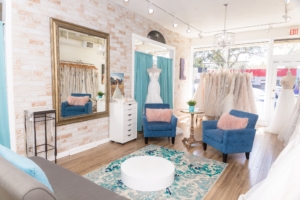
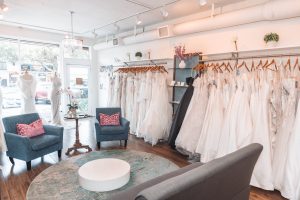
The private appointment setting at The Dressing Room actually helps with timeline pressure because you’re not competing with other brides for attention or feeling rushed through the process. Whether you have all the time in the world or you’re working with a tight deadline, your appointment is entirely focused on your needs.
Making Your Timeline Work for You
Whatever timeline you’re working with, here’s how to make it successful. Be realistic about what’s possible within your timeframe. If you’re six months out, you’re probably not getting a heavily customized dress from a designer with a nine-month production schedule. Accept the reality and focus on what is possible.
Be decisive when you need to be. The shorter your timeline, the more important it is to make confident decisions. Trust your gut, trust your stylist’s expertise, and don’t let perfect be the enemy of good.
Be communicative with us about your full situation. Tell us about your timeline, your budget, your concerns, your vision. The more we understand, the better we can help you.
Be flexible where you can be. Maybe you can’t have your first-choice designer, but there’s a similar style from another designer who produces faster. Maybe your dream fabric is available in a different silhouette. Being open to alternatives expands your options.
The Bottom Line on Timelines
The ideal time to start shopping for your wedding dress at The Dressing Room St. Petersburg is nine to twelve months before your wedding. This gives you time for production, alterations, and decision-making without stress or rush fees. But whether you’re eighteen months out or three months away, we can work with your timeline to find your perfect dress.
What matters most isn’t following a rigid timeline. It’s starting the process when you’re ready – with a clear vision, a realistic budget, and the mental space to enjoy the experience. Some brides are ready at twelve months out. Others aren’t ready until six months before. Both are fine. What’s not fine is shopping before you’re ready and then having buyer’s remorse, or waiting so long that you’re panicked and stressed throughout the entire process.
The private appointment setting at The Dressing Room means that whatever your timeline, you’ll have our complete attention and expertise focused on making it work. We’re not trying to rush you through so we can help the next bride. We’re taking whatever time your situation needs to find the right solution.
Ready to start your wedding dress journey, whatever your timeline? Book your private appointment at The Dressing Room St. Petersburg, and let’s create a plan that works perfectly for your schedule and your dream dress.