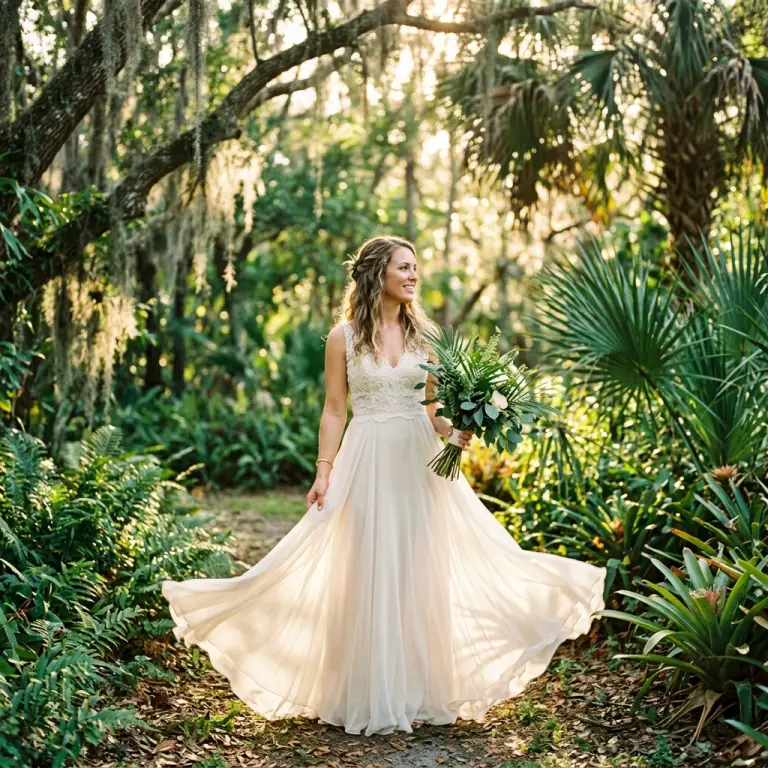
Ask ten brides what they want and most will describe a feeling long before they describe a dress. Something that makes them feel like the truest version of themselves as they turn the corner and everyone stands. That feeling almost always comes down to shape. Wedding dress silhouettes are the architecture of a gown, the overall form it cuts before you notice a single bead or a stitch of lace, and learning to read them is the fastest way to shop with confidence instead of overwhelm. This is a stylist’s guide to the shapes that matter, written for brides across Tampa Bay who want to walk into their first appointment already speaking the language.
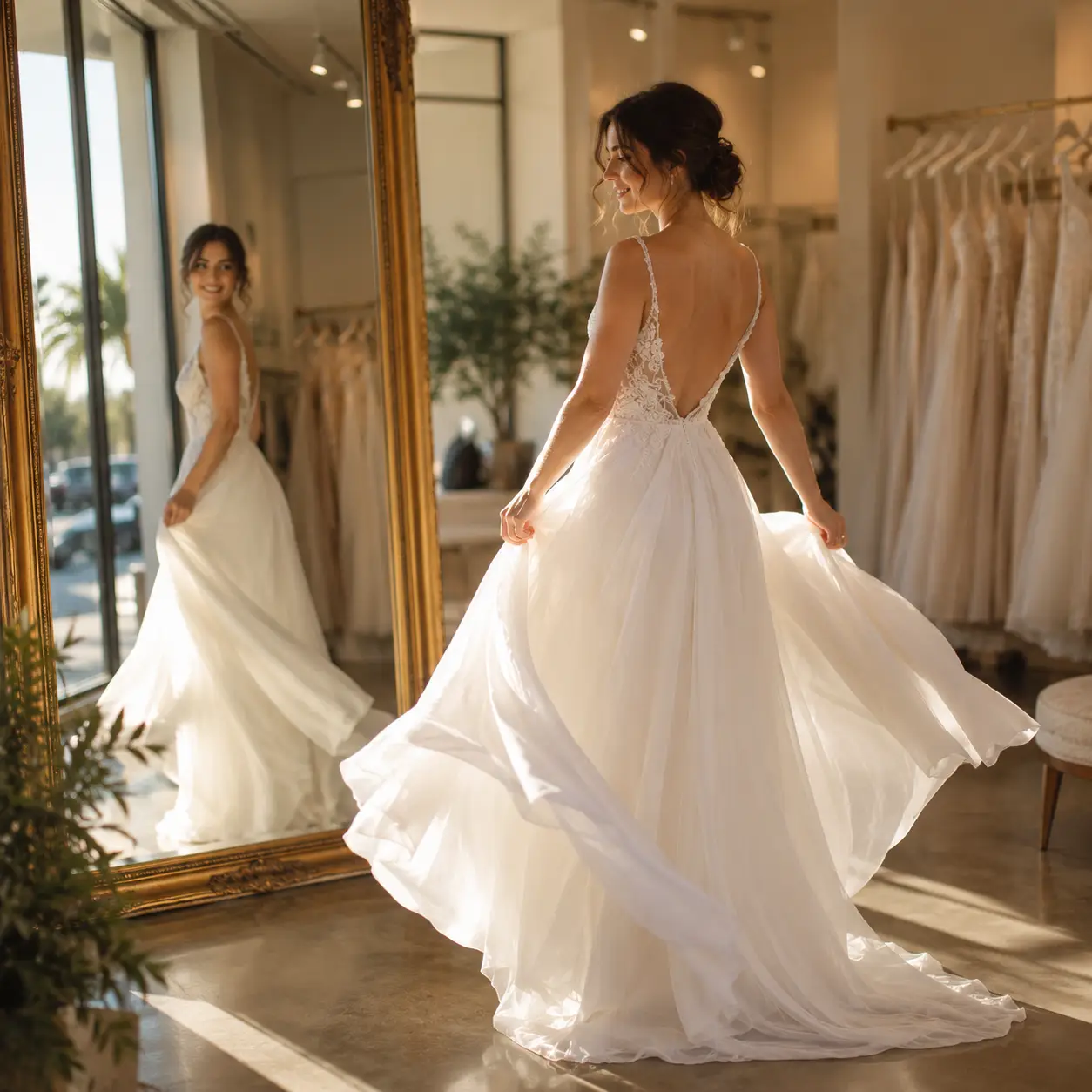
What wedding dress silhouettes actually are, and why they matter more than the details
Silhouette is the outline of the dress. It is the story the gown tells from across the room, before anyone is close enough to see the fabric or the embellishment. Lace, sleeves, necklines, and trains are all wonderful, but they sit on top of the silhouette. Choose the shape first and every other decision gets easier, because you are now editing within a form that already flatters your proportions and suits the way you want to move.
The vocabulary has been remarkably stable for generations. The white gown itself only became the standard after Queen Victoria married in 1840, and you can trace the way these shapes evolved through the collection at the Victoria and Albert Museum, which is a lovely reminder that a wedding dress is a small piece of history you get to wear. What has changed is that a modern bride is no longer boxed into one silhouette because of her size or her age. Every shape below is available in a genuinely wide range, and the only question that matters is which one makes you feel most like yourself.
One idea worth carrying into your appointment: there is no such thing as a shape you have to hide. Silhouette is not about disguising anything. It is about proportion, balance, and how you want to feel when you move.
The ballgown: drama, romance, and the fairytale shape
The ballgown is the silhouette most people picture when they close their eyes and imagine a bride. A fitted bodice meets a full, sweeping skirt at the natural waist, and the effect is pure occasion. It creates the illusion of a smaller waist because of the dramatic contrast between the top and the skirt, which is why it flatters so many different figures.
Ballgowns love a grand room. If you are marrying in a ballroom, a historic venue, or a church with a long aisle, the shape earns every inch of that space. They photograph like a storybook. The trade to weigh is movement and warmth. A full skirt is more dress to carry, and in the Florida heat you will feel the extra fabric, so it shines indoors or in the cooler months.
The A-line: the shape that flatters almost everyone
If one silhouette earns the title of universal, it is the A-line. The name says it all. The dress is fitted through the bodice and then flares gently and continuously from the waist to the hem, tracing the shape of a capital A. There is no sharp break and no clinging, which is exactly why it works on nearly every body.
An A-line skims rather than grips. It defines the waist without demanding a specific figure to do so, it gives the illusion of height, and it leaves room to walk, dance, and breathe. For a bride who is not sure where to start, this is almost always the shape we reach for first, because it lets her see a clean, flattering line and then decide whether she wants more drama or less. Many of the designer collections we carry, including Maggie Sottero, Stella York, and Essense of Australia, build beautiful A-lines in everything from crisp minimalist mikado to soft romantic lace.
Fit-and-flare and the trumpet: curves with movement
Between the gentle A-line and the dramatic mermaid sits a family of shapes that follow the body a little more closely and then release into a flare. A fit-and-flare hugs through the bodice and hip and then blooms outward, usually around mid-thigh, giving you definition on top and movement on the bottom. A trumpet is its close cousin, fitted a touch lower before it opens.
These silhouettes are wonderful for a bride who wants to show her shape without committing to the very structured mermaid. You get curve and contour along with the freedom to actually walk to your reception. Fabric makes a real difference here. A soft crepe reads modern and fluid, while a beaded or lace overlay reads glamorous, and the same silhouette can feel completely different depending on that choice.
The mermaid: bold, sculpted, unapologetic
The mermaid is the most figure-following silhouette on the rack. It is fitted through the bodice, waist, hips, and thighs, and it flares dramatically low, often around the knee, into a striking fishtail. When a bride wants to feel powerful and unmistakably glamorous, this is the shape that delivers.
It is a confident choice and it deserves an honest note about comfort. A true mermaid limits your stride until the flare begins, so many brides plan for a bustle and practice sitting and dancing at their fitting. None of that is a reason to avoid it. It simply means the mermaid rewards a bride who tries it on, moves in it, and knows going in that she is choosing drama on purpose. On the right person it is breathtaking.
Sheath and column: effortless, modern, and made for a Florida wedding
A sheath, sometimes called a column, falls straight from the neckline to the hem in a narrow, uninterrupted line. It skims the body without the fitted sculpting of a mermaid, and the result is easy, elegant, and quietly modern. For a coastal or garden wedding in our part of the world, it is hard to beat.
This is often the shape we suggest for a beach or waterfront ceremony around Tampa Bay, because a lightweight crepe or chiffon sheath moves with the breeze, stays cool in the heat, and never fights the sand. It reads relaxed without reading casual. Designers like Lillian West and Essense of Australia do this beautifully in flowing fabrics that feel as good as they look. A sheath also travels well, which matters if your ceremony is on the water and your reception is somewhere else entirely.
Matching your silhouette to your body, your venue, and your season
Here is the part most online guides get wrong. They hand you a chart that pairs a body type with a single approved shape, as if you owe your dress an apology. That is not how a good appointment works, and it is not how bodies work.
The honest version is simpler. Every silhouette flatters. The question is which flattery you want. A pear-shaped bride can wear a sheath she loves or an A-line that balances her proportions, and both are correct. A curvy bride can choose a fitted mermaid because she wants her curves celebrated, and that is the whole conversation, which is exactly how we approach fit for plus-size brides across Tampa Bay, with real samples in real sizes up to 30 that you can actually try on the day you visit. A petite bride often loves the elongating line of an A-line or sheath, while a taller bride can carry a ballgown with ease. None of this is a rule. It is a starting point.
Venue and season matter just as much as figure. A ballroom invites drama, a garden invites softness, and a beach invites a fabric that will not wilt in the humidity. Because our gowns are built with structured, supportive bodices, most brides try on and wear them without a bra, and shapewear becomes a personal preference rather than a requirement. The dress does the work of holding you. Your only job is to notice which shape makes you exhale and smile at the mirror, because that reaction is the real data. A silhouette is not truly yours until you have seen it on your own body, in good light, with the people you love in the room.
Frequently asked questions
What is the most flattering wedding dress silhouette? There is no single most flattering silhouette, which is good news. The A-line comes closest to universal because it defines the waist and skims the hips on almost every figure, but flattery is personal. The most flattering shape is the one that matches your proportions, your venue, and the way you want to feel, and the only way to know is to try a few.
Which wedding dress silhouette is best for my body type? Every silhouette can flatter every body, so the better question is which effect you want. An A-line balances and elongates, a sheath reads modern and easy, a ballgown adds drama and defines the waist, and a mermaid celebrates curves. Rather than following a chart, we pull a range of shapes for you and let your own reaction in the mirror decide.
What is the difference between a mermaid and a trumpet silhouette? Both follow the body and flare at the bottom, but the flare point differs. A mermaid stays fitted through the thigh and flares low, around the knee, for maximum drama and a fishtail effect. A trumpet flares a little higher, closer to mid-thigh, so it gives you shape and glamour with a bit more room to walk and move.
What wedding dress silhouette is best for a beach or outdoor wedding in Florida? For a beach or waterfront ceremony around Tampa Bay, a sheath or a soft A-line in a lightweight crepe or chiffon is ideal. These shapes move with the breeze, stay cooler in the heat and humidity, and glide over sand instead of dragging through it. Save heavier ballgowns for cooler months or indoor venues.
Which wedding dress silhouette is the most comfortable? Sheath and A-line silhouettes tend to be the most comfortable because they skim the body and leave room to walk, sit, and dance. Ballgowns are comfortable through the hips but heavier to carry, and true mermaids restrict your stride until the flare, so brides who choose one often add a bustle and practice moving in it at their fitting.
What silhouette works best for plus-size brides? Every silhouette does, and that is not a slogan. A fitted mermaid, a structured A-line, a flowing sheath, and a full ballgown are all available in our plus-size collection in sizes up to 30. The right choice is about the look you want, not about minimizing anything. We keep real plus-size samples in store so you can try shapes on rather than imagining them.
What is an A-line wedding dress? An A-line is fitted through the bodice and then flares out gently and continuously from the waist to the hem, tracing the shape of a capital letter A. It defines the waist without clinging, creates a long, flattering line, and leaves room to move, which is why it suits nearly every body and remains one of the most popular silhouettes.
How do I know which silhouette suits me before my appointment? You do not need to know beforehand, and guessing from a screen is unreliable. It helps to save a few images of dresses you love and to note your venue and season, but the real answer comes from trying several shapes in person. Most brides are surprised by which silhouette wins once it is on their body.
Can I try on different silhouettes at your St. Petersburg boutique? Yes. During your private appointment on Central Avenue, your stylist pulls a range of silhouettes based on your vision, your venue, and your budget, so you can compare shapes side by side. Because the entire boutique is reserved just for you, there is space and time to try, move, and decide without any rush or audience.
What silhouette is best for a petite bride? Petite brides often love silhouettes that create a long, unbroken line, such as the A-line or the sheath, because they visually add height. A natural or slightly raised waist helps too. That said, a petite bride can absolutely wear a ballgown or mermaid, so the goal is balance and proportion rather than a hard rule about what a shorter frame can carry.
Ready to find your silhouette?
The fastest way to discover your shape is to try a few in a room that belongs entirely to you. Book a private VIP bridal appointment at The Dressing Room in St. Petersburg and your stylist will pull a curated range of silhouettes chosen for your vision, your venue, and your budget. Reserve your appointment online, or call us at 727-323-7666. The entire boutique will be yours, and so will the moment you see your shape in the mirror.