After years of helping Tampa Bay brides find their perfect wedding dresses at The Dressing Room on Central Avenue in St. Petersburg, we’ve noticed certain mistakes that brides make again and again during the shopping process. These missteps can turn what should be a joyful experience into a stressful one, or worse, result in choosing a dress that doesn’t truly make you happy. Let’s talk about the most common wedding dress shopping mistakes Tampa Bay brides make and, more importantly, how to avoid them so your dress shopping experience is everything you’ve dreamed it would be.
The first and perhaps most significant mistake brides make is starting their dress shopping without a clear budget in mind. We see this constantly—brides come in saying they’ll “just see what they like” before discussing price, and inevitably they fall in love with a dress that costs twice what they can actually spend. This creates heartbreak and disappointment that could have been entirely avoided with upfront honesty about budget.
Here’s the reality: wedding dresses at quality bridal boutiques in St. Petersburg typically range from $1,500 to $5,000 and beyond. If your absolute maximum budget is $2,000, there’s no point in trying on $4,000 dresses. You won’t suddenly find the money, and you’ll just make the dresses in your actual budget feel disappointing by comparison. Before your first appointment, sit down and determine what you can realistically spend on your dress, alterations, and accessories combined. Then communicate that budget clearly to your consultant so they can show you dresses you can actually afford.
The mistake isn’t having a limited budget—it’s not being honest about it. Every budget has beautiful options, and at The Dressing Room, we carry designers at various price points specifically so we can help brides with different budgets. But we can only help you if you’re upfront about your financial constraints from the very beginning.
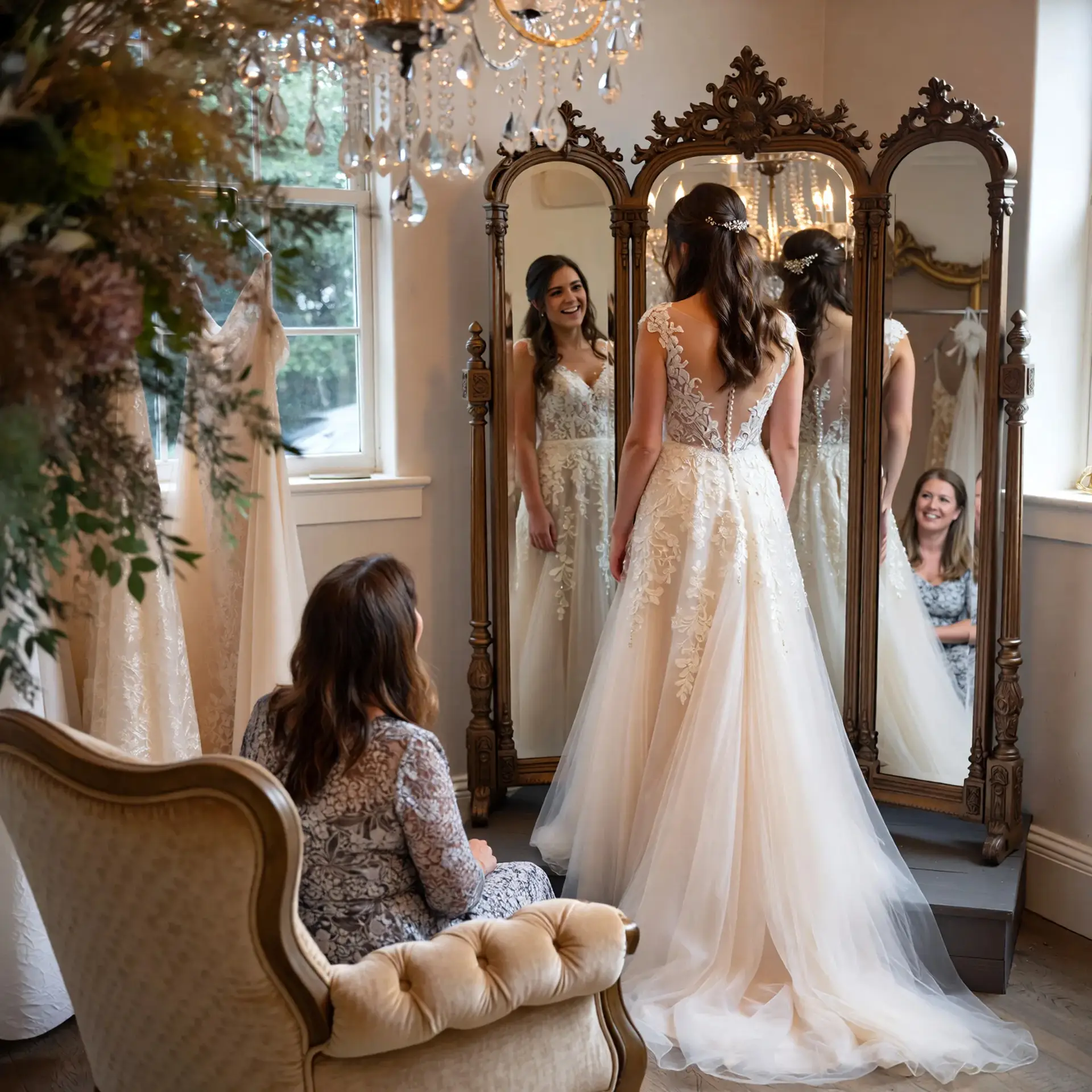
The second major mistake is bringing too many people to your appointment. We understand the temptation—you want everyone you love to be part of this special moment. But here’s what actually happens when you bring seven people to your appointment: you get seven different opinions, seven different style preferences, and seven people who all want to feel heard and involved. Instead of focusing on how you feel in each dress, you’re managing other people’s reactions and trying to please everyone.
The most successful appointments typically involve two to four carefully chosen people—usually some combination of your mother, a sister, your maid of honor, or your closest friend. These should be people who understand your style, who will be honest but kind, and who ultimately want you to be happy more than they want to impose their own preferences. According to Martha Stewart Weddings’ dress shopping advice, keeping your entourage small and supportive is one of the most important factors in a successful shopping experience.
Think about who you’re bringing and why. If your future mother-in-law has very different taste than you and tends to be critical, maybe she doesn’t need to be at your first appointment. If your sister always has to be the center of attention, perhaps she’s not the best choice. Choose people who will make this about you, not about them.
The third mistake is being too rigid about what you think you want before you’ve actually tried anything on. Brides come in absolutely certain they want a ballgown, and they end up choosing a sheath. They’re convinced they need a strapless dress, and they fall in love with off-the-shoulder sleeves. They’ve decided they must have lace, and they choose clean crepe instead.
Pinterest boards and Instagram are wonderful for gathering inspiration, but they can’t tell you what will actually look and feel amazing on your body. The dress that looks stunning on a model or another bride might not work for you at all, and the dress you never would have considered might be the one that makes you cry happy tears when you see yourself in it.
Come to your appointment with ideas and inspiration, but stay open-minded. Let your consultant pull dresses you might not have considered. Try on that silhouette you thought you’d hate. You might be surprised, or you might confirm that your original instinct was right—but at least you’ll know for sure rather than always wondering.
The fourth mistake is shopping too late. We’ve covered the timeline in detail before, but it bears repeating: wedding dresses typically take six to nine months to arrive after ordering, plus another two to three months for alterations. If you start shopping six months before your wedding, you’re already cutting it dangerously close. If you’re shopping three months out, you’re limited to off-the-rack options and rush orders with no guarantee.
The stress of a compressed timeline affects your entire shopping experience. You can’t take time to think about your choices. You can’t comparison shop at multiple boutiques if you want to. You’re making a significant decision under pressure rather than with the luxury of time and thoughtfulness. Starting your dress shopping nine to twelve months before your wedding eliminates this stress entirely and gives you the freedom to find the perfect dress without panic.
The fifth mistake is fixating on dress size rather than fit. Bridal sizing runs small and inconsistent compared to regular clothing sizing. If you typically wear a size 8 in regular clothes, you might be a 10, 12, or even 14 in wedding dresses depending on the designer. This is completely normal and has nothing to do with your actual body size.
Sample dresses in boutiques are typically sizes 8, 10, or 12, which means they’ll be either too large or too small for many brides. Your consultant will use clips to show you how the dress will look in your correct size. Don’t get hung up on what size you’re trying on or what size you’ll order. Focus on how the dress looks and feels, and trust that when it’s made in your measurements, it will fit beautifully.
Plus-size brides especially need to ignore the number on the tag. Bridal sizing can feel frustrating when you’re ordering a size 20 or 24, but it’s just a number that’s needed for manufacturing. It has no bearing on your worth, your beauty, or how stunning you’ll look on your wedding day.
The sixth mistake is not considering your venue and wedding vibe when choosing your dress. A heavily beaded ballgown is gorgeous, but if you’re getting married barefoot on Clearwater Beach, it’s going to feel incongruous and uncomfortable. A simple slip dress is elegant and modern, but if you’re having a black-tie celebration at a grand Tampa ballroom, it might feel too casual.
Your dress should match the formality level and setting of your wedding. This doesn’t mean you can’t love ballgowns if you’re having a beach wedding—it means you need to choose a lighter, less structured ballgown in flowing fabrics rather than heavy satin and beading. Think about where you’re getting married, what time of day, what season, and what the overall vibe is, and choose a dress that harmonizes with those elements rather than fighting against them.
The seventh mistake is letting someone else’s opinion override your own feelings. This happens constantly: a bride tries on a dress and loves it, her face lights up, she can’t stop looking at herself in the mirror—but then her mom or sister makes a negative comment, and suddenly the bride is doubting herself.
Your wedding dress should make you feel amazing. Period. If a dress makes you feel beautiful, confident, and authentically yourself, that’s your dress. It doesn’t matter if your mom prefers more coverage, your sister thinks it’s too simple, or your friend wanted you to choose something more dramatic. This is your wedding, your body, and your dress. Trust your own reaction and your own feelings.
The eighth mistake is not being honest with your consultant. Brides sometimes say they love dresses they actually don’t, either because they don’t want to be rude or because they’re worried about seeming difficult. But your consultant can’t help you find the right dress if you’re not honest about what you like and don’t like.
Good bridal consultants want genuine feedback. If you don’t like a dress, say so—and if possible, articulate why. “This isn’t quite right” is less helpful than “I don’t like how the lace looks on me” or “This silhouette makes me feel constricted.” The more specific feedback you can give, the better your consultant can understand your preferences and pull dresses that actually work for you.
Being honest about your budget, your concerns about your body, your timeline, and your preferences allows your consultant to truly help you. We’re not here to judge—we’re here to find you a dress you love. When you book your appointment at The Dressing Room, come prepared to be open and honest with your consultant. That honesty is the foundation of a successful shopping experience.
The ninth mistake is not considering alterations in your budget and timeline. Some brides think the dress price is the total cost, not realizing that alterations typically add $300 to $800 or more to your total investment. Others don’t factor in the time alterations take, assuming they can pick up their dress and wear it immediately.
Every bride needs alterations. This isn’t about buying the wrong size—it’s about customizing a dress to fit your unique body perfectly. Budget for alterations from the very beginning, and understand that your dress should arrive at the boutique at least three months before your wedding to allow adequate time for alterations. Most brides need two to three fittings spaced several weeks apart to perfect the fit.
Ask about alterations costs and timeline at every boutique you visit. Some boutiques have in-house alterations, others work with specific seamstresses, and some leave you to find your own. Understanding the alterations process prevents surprises and ensures you’re prepared for the complete dress journey, not just the purchase.
The tenth and final mistake is making decisions based on what photographs well rather than what feels good to wear. Instagram and Pinterest have created tremendous pressure for brides to choose dresses that will look amazing in photos rather than dresses that feel amazing to wear. While you absolutely want to look beautiful in your wedding photos, you’re going to be wearing your dress for eight or more hours on your wedding day. Comfort, mobility, and how you feel in the dress matter just as much as how it photographs.
Try sitting down in your dress. Walk around naturally. Move your arms. Imagine dancing at your reception. If a dress is uncomfortable during the fifteen minutes you’re trying it on, it’s going to be miserable after hours of wearing it at your Tampa Bay wedding. Beauty and comfort aren’t mutually exclusive—the right dress makes you look and feel amazing.
Additional mistakes worth mentioning include not trying on your actual undergarments and shoes during your alterations appointments, not practicing sitting and moving in your dress before your wedding day, and not considering Florida’s climate when choosing fabrics and construction. Heavily beaded dresses and multiple layers can be beautiful, but they’re also hot and heavy in Florida humidity.
Some brides make the mistake of overly focusing on trends rather than timeless style. Trends come and go quickly—the dress style that feels cutting-edge today might look dated in photos ten years from now. Choose elements that feel timeless and classic rather than overly trendy, unless you genuinely love the trend and aren’t concerned about your photos looking dated eventually.
Another mistake is not reading reviews or researching boutiques before booking appointments. Not all bridal boutiques offer the same level of service, quality, or selection. Reading reviews, looking at real bride photos, and understanding what designers and dresses a boutique carries helps ensure you’re not wasting time at shops that don’t match your needs or budget.
Some brides make the mistake of not having a backup plan for alterations and delivery. What if your alterations seamstress gets sick? What if your dress arrives later than expected? What if you need last-minute adjustments? Understanding contingency plans and having backup options reduces stress as your wedding approaches.
The mistake of not communicating clearly with your partner about budget and dress preferences can create tension. Some grooms have strong feelings about wanting to see the dress first or preferring their bride wear something specific. Having these conversations before you start shopping prevents conflict and ensures you’re both on the same page about this significant purchase.
Finally, some brides make the mistake of settling for a dress that’s “fine” rather than waiting for one they truly love. If you’ve tried on dozens of dresses and nothing has felt right, it’s okay to keep looking. Don’t convince yourself that a dress you feel lukewarm about will suddenly feel perfect on your wedding day. The right dress exists—sometimes it just takes more looking to find it.
Avoiding these common mistakes transforms your wedding dress shopping experience from potentially stressful to genuinely enjoyable. When you come to your appointment prepared with a realistic budget, a small supportive group, an open mind, and honest communication, you create the ideal conditions for finding a dress you’ll love wearing on your Tampa Bay wedding day.
The brides who have the best shopping experiences are those who trust the process, stay true to themselves, and remember that this is supposed to be fun. Yes, it’s an important decision and a significant purchase, but it’s also a celebration of your upcoming marriage and a chance to feel beautiful and special. Approach it with joy, preparation, and self-trust, and you’ll avoid the common pitfalls that trip up so many brides.
FREQUENTLY ASKED QUESTIONS
What’s the biggest mistake Tampa Bay brides make when shopping for wedding dresses?
The biggest mistake is not establishing a clear budget before starting to shop. Trying on dresses you can’t afford creates heartbreak and makes dresses in your actual budget feel disappointing. Be honest about your budget from the start so your consultant can show you beautiful dresses you can actually purchase.
How many people should I bring to my wedding dress appointment in St. Petersburg?
Bring two to four carefully chosen people maximum. Larger groups create too many conflicting opinions and make the experience overwhelming. Choose supportive people who understand your style and will prioritize your happiness over their own preferences. Some brides shop alone for their first appointment and find it wonderfully freeing.
When should I start shopping for a wedding dress in Tampa Bay?
Start 9-12 months before your wedding. Wedding dresses take 6-9 months to arrive after ordering, plus 2-3 months for alterations. Starting earlier gives you time to explore options without pressure. Waiting too long limits you to off-the-rack dresses and creates unnecessary stress.
Should I stick to my Pinterest vision or be open to trying different styles?
Be open to trying different styles even if you have a clear vision. Many brides end up choosing something completely different from what they thought they wanted. Pinterest provides inspiration, but only trying on dresses reveals what actually looks and feels amazing on your body. Trust your consultant’s suggestions.
How much should I budget for wedding dress alterations in St. Petersburg?
Budget $300-$800 for alterations, though complex work can cost more. Every bride needs alterations—this isn’t optional. Factor alterations costs into your total dress budget from the beginning. Ask about alterations pricing and timeline at each boutique you visit to avoid surprises.
What if I don’t like any of the dresses my consultant shows me?
Be honest with your consultant about what you don’t like and why. Specific feedback like “this lace feels too heavy” or “this silhouette makes me uncomfortable” helps your consultant understand your preferences better than vague responses. Good consultants welcome honest feedback—it helps them help you better.
Is wedding dress sizing different from regular clothing sizes?
Yes, bridal sizing runs small and varies by designer. You might be several sizes larger in bridal than in regular clothing—this is completely normal. Sample dresses are typically sizes 8, 10, or 12. Focus on how the dress looks and feels, not the number on the tag. Your ordered dress will be made to your measurements.
Should my wedding dress match my venue style?
Your dress should complement your venue’s formality level and setting. A heavily beaded ballgown feels incongruous at a casual beach wedding, while a simple slip dress might feel too casual for a black-tie ballroom celebration. Consider your venue, season, and wedding vibe when choosing your dress style.
What if my mom or bridesmaids don’t like the dress I love?
Choose the dress that makes you feel amazing, even if others prefer something different. This is your wedding and your body. If a dress makes you feel beautiful and confident, that’s your dress. Well-meaning loved ones sometimes project their own preferences—trust your own reaction above all others.
Can I change my mind about my dress after ordering?
Wedding dresses are custom-ordered to your specifications and typically cannot be returned or exchanged. Some boutiques allow design modifications before manufacturing begins, but once production starts, changes are limited. This is why it’s crucial to be certain before saying yes. Take time to think if you need it—don’t feel pressured to decide immediately.