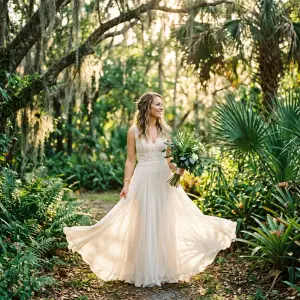
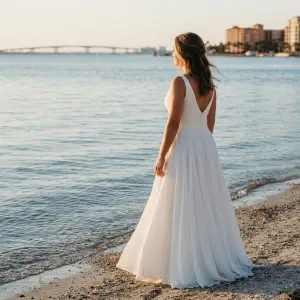
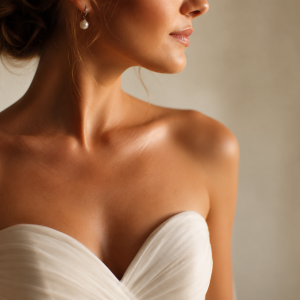
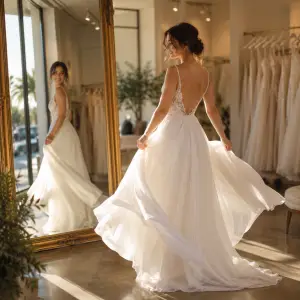
Two gowns can share the exact same silhouette and neckline and feel like completely different dresses, and the reason is almost always the fabric. Wedding dress fabrics decide how a gown moves, how it photographs, how warm it feels on a summer afternoon, and whether it reads crisp and modern or soft and romantic. For a bride marrying anywhere around Tampa Bay, where the heat and humidity have a vote, fabric is not a detail to leave until the end. It is one of the first things worth understanding. This is a stylist’s guide to the materials you will meet on the rack, and how to choose the one that suits your gown, your venue, and your comfort.
Why fabric is the decision brides underestimate
Silhouette gets the attention, but fabric is what your body actually lives in for eight or more hours. It controls weight, warmth, and drape, which is the way a material falls and moves. A structured fabric holds a shape and photographs architecturally. A fluid fabric floats and follows you. Neither is better. They simply tell different stories, and the same silhouette in two fabrics can feel worlds apart.
Fabric also decides comfort, and in Florida that is not a small thing. A heavy, densely lined gown that looks stunning in a photo can feel like a lot to carry through an outdoor ceremony in July. Knowing how each material behaves lets you choose beauty that also feels good, which is the only kind of beautiful that lasts all night.
Satin and mikado, structure and quiet luxury
Satin is the fabric most people picture when they imagine a wedding gown. It is smooth, lustrous, and substantial, with a soft sheen that catches light beautifully and a weight that makes a gown feel luxurious. It suits clean, modern silhouettes and formal settings, and it drapes with a gentle, liquid fall on a sheath or a fluid A-line.
Mikado is satin’s more structured cousin, a heavier, crisper weave that holds architectural shapes with confidence. When you see a sculptural ball gown or a minimalist A-line with clean, standing lines, mikado is often the reason. It is having a real moment in modern bridal for exactly that reason, favored for its shape and its lack of cling. Both fabrics read expensive because they are substantial, so they are best loved by brides drawn to a formal, polished look, and they are most comfortable in cooler months or air-conditioned ballrooms rather than a midday outdoor ceremony.
Crepe, the modern minimalist’s favorite
Crepe has quietly become one of the most requested fabrics for the contemporary bride, and for good reason. It is lightweight yet opaque, with a soft matte finish and a beautiful fluid drape that skims the body rather than clinging to it. On a sheath or a column gown it looks sleek, effortless, and undeniably modern.
For a Tampa Bay bride, crepe has a practical superpower. It drapes gorgeously without the weight of satin, so it wears cooler and moves easily, which makes it a genuine year-round option even in Florida warmth. If your taste runs minimalist, or you want a gown that feels as good as it looks at a waterfront or garden wedding, crepe deserves a place at the top of your list. Many of the designer collections we carry do beautiful things with crepe.
Chiffon, organza, and tulle, the airy fabrics
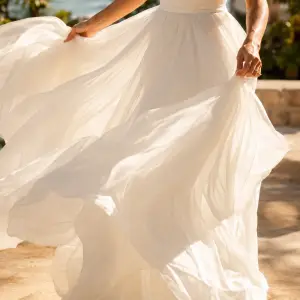
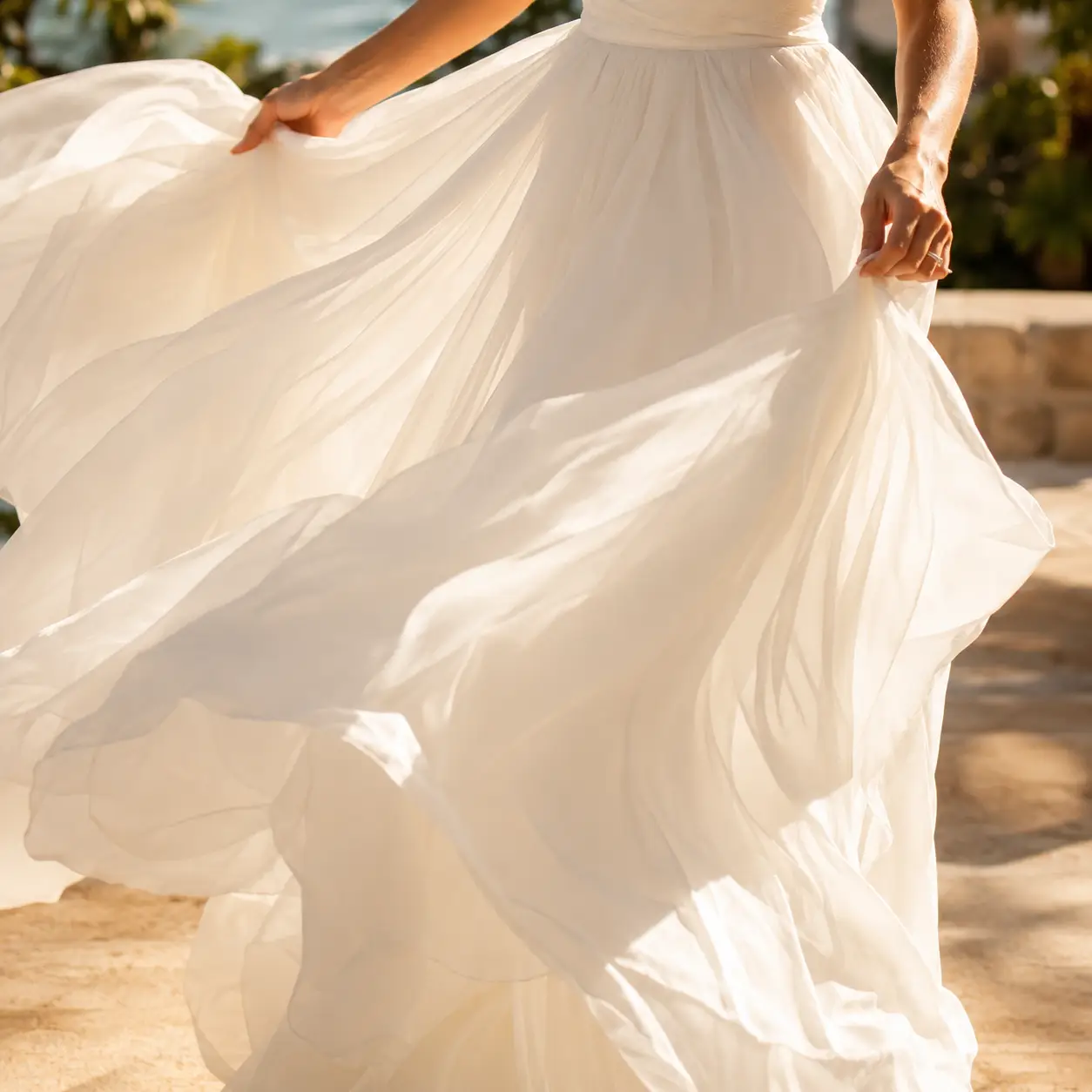
When a gown looks like it is floating, one of the airy fabrics is usually responsible. Chiffon is a lightweight, sheer, plain-woven fabric, prized for a soft, romantic drape and a gentle shimmer, and it is a favorite for outdoor and beach weddings because it moves in the breeze and wears cool. You can read more about its properties and history at Britannica, which describes it as delicate in appearance but relatively strong.
Organza is crisper than chiffon, sheer but with more body, which gives it a light structure that holds a soft shape without weight. It creates volume that still feels airy, lovely for a romantic skirt that photographs full but does not overheat. Tulle is the fine netting behind most dreamy, voluminous skirts, from soft and romantic layers to full ballgown drama, and it can be delicate or bold depending on how it is used. All three of these fabrics breathe well, which makes them natural friends to a warm Florida wedding.
Lace, the detail that carries the romance
Lace is less a base fabric than a layer of feeling. It is the most romantic of bridal materials, and it ranges enormously, from delicate, vintage-inspired patterns to bold, dimensional florals and modern sheer applications. Lace is usually applied over another fabric or an illusion base, so it adds texture, story, and detail rather than structure.
The kind of lace changes everything. A fine, heirloom-style lace reads timeless and delicate, while a large-motif floral lace reads fresh and contemporary. Because lace carries so much of a gown’s personality, it is worth seeing in person and in good light, since a photograph rarely captures its true dimension. A bride who loves romance and detail often finds that lace, more than silhouette, is what makes her fall in love.
Choosing your fabric for a Florida wedding
Here is the practical version, minus the mystique. Start with your season and venue. For a warm outdoor or waterfront ceremony around Tampa Bay, lean toward the lighter, breathable fabrics like crepe, chiffon, organza, or unlined lace, which wear cooler and move beautifully in a coastal breeze. For a formal ballroom or a cooler-month wedding, the heavier fabrics like satin and mikado come into their own, holding structure and reading richly formal.
Then think about the feeling you want. Structured fabrics photograph architecturally and feel polished, while fluid fabrics feel soft and romantic and follow your movement. Consider comfort honestly, because a gown you are fighting all night steals your attention from the day, and that includes finding the right fit for every body, which is exactly how we approach dressing our curvy brides in our guide to plus-size wedding dresses in Tampa Bay. The best way to understand fabric is to touch it, so hold a few, watch how they move, and notice which one makes you want to twirl.
A quick note on caring for your fabric
The fabric you choose also shapes how your gown behaves between the fitting and the big day, which is worth a thought before you fall in love. Delicate natural fabrics like silk satin and fine silk chiffon are gorgeous but ask for gentle handling and professional care, while sturdier woven synthetics resist wrinkles and travel more easily, which matters if you are marrying at a destination or shipping a gown across the country. Structured fabrics like mikado hold a press beautifully and tend to arrive looking crisp, while airy layers of tulle and organza often want a careful steam before the ceremony to look their softest.
None of this should scare you away from a fabric you adore. It simply helps to know what your gown will ask of you, so you can plan a steam, a good garment bag, or a professional press into your timeline rather than scrambling the morning of. Humidity is worth a mention too, since a Florida summer can relax delicate layers, which is one more reason breathable fabrics that are forgiving in the heat tend to serve outdoor brides so well. Your stylist can walk you through exactly how to care for the fabric you choose so it looks flawless when it counts.
Frequently asked questions
What is the best fabric for a wedding dress? There is no single best fabric, because each one serves a different look and setting. Satin and mikado suit structured, formal gowns, crepe suits sleek modern styles, and chiffon, organza, and tulle suit airy, romantic looks. The best fabric is the one that matches your silhouette, your venue, your season, and how you want the gown to feel and move.
What is the best wedding dress fabric for a hot or Florida wedding? For a warm-weather or Florida wedding, choose lightweight, breathable fabrics like crepe, chiffon, organza, or unlined lace. These wear cooler, move in a breeze, and feel comfortable outdoors. Heavier satin and mikado hold beautiful structure but trap more heat, so they suit cooler months or air-conditioned indoor venues better.
What is the difference between satin and mikado? Satin is smooth, lustrous, and fluid, with a soft sheen and a liquid drape that suits modern and formal gowns. Mikado is a heavier, crisper weave that holds architectural shapes and stands away from the body. Choose satin for a soft, polished drape and mikado for a sculptural, structured silhouette.
What is crepe fabric in a wedding dress? Crepe is a lightweight, opaque fabric with a soft matte finish and a fluid drape that skims the body. It reads sleek and modern, works beautifully on sheath and column silhouettes, and wears cooler than satin, which makes it a popular year-round choice for minimalist brides and warm-weather weddings.
Is chiffon a good fabric for a wedding dress? Yes, especially for outdoor, beach, and warm-weather weddings. Chiffon is lightweight, sheer, and softly draping, so it moves gracefully in a breeze and photographs romantically. It is often used as an overlay to give a gown a floating, ethereal quality, and it wears cool, which suits a Florida climate well.
What is the most comfortable wedding dress fabric? The lighter, more breathable fabrics tend to be the most comfortable, especially crepe, chiffon, and organza, because they wear cooler and move with you. Heavier satin and mikado are comfortable through structure but warmer to wear. Comfort also depends on lining and construction, which your stylist can help you assess in person.
Which wedding dress fabric photographs best? It depends on the look you want. Satin and mikado photograph with rich, architectural structure and catch light with a soft sheen. Chiffon, organza, and tulle photograph as soft, romantic movement. Lace photographs with texture and detail. There is no single winner, so choose the fabric that captures the feeling you want your photos to have.
What fabric is used for a ballgown skirt? Full, voluminous skirts are most often built from tulle, which is a fine netting that creates soft or dramatic volume without much weight, or from organza, which adds crisp, airy body. Satin and mikado can also create structured ballgown skirts when a heavier, more sculptural shape is the goal.
Does the fabric affect the price of a wedding dress? Fabric is one of several factors in a gown’s price, along with construction, embellishment, and designer. Luxurious natural fibers and intricate laces can raise the cost, while quality synthetics can offer a similar look for less. At your appointment, your stylist works within your budget and shows you gowns in that range.
Where can I feel different wedding dress fabrics in St. Petersburg? You can feel them in person at The Dressing Room on Central Avenue in St. Petersburg. During your private appointment, your stylist pulls gowns in a range of fabrics so you can compare weight, drape, and movement side by side. Touching the fabric and seeing how it moves is the best way to choose.
Ready to feel the difference?
Fabric is the one thing a photo can never fully capture. Book a private VIP bridal appointment at The Dressing Room in St. Petersburg and your stylist will pull gowns across a range of fabrics chosen for your style, your venue, and the Florida season. Reserve your appointment online, or call us at 727-323-7666. The entire boutique will be yours, and so will the moment you find the one that moves the way you do.