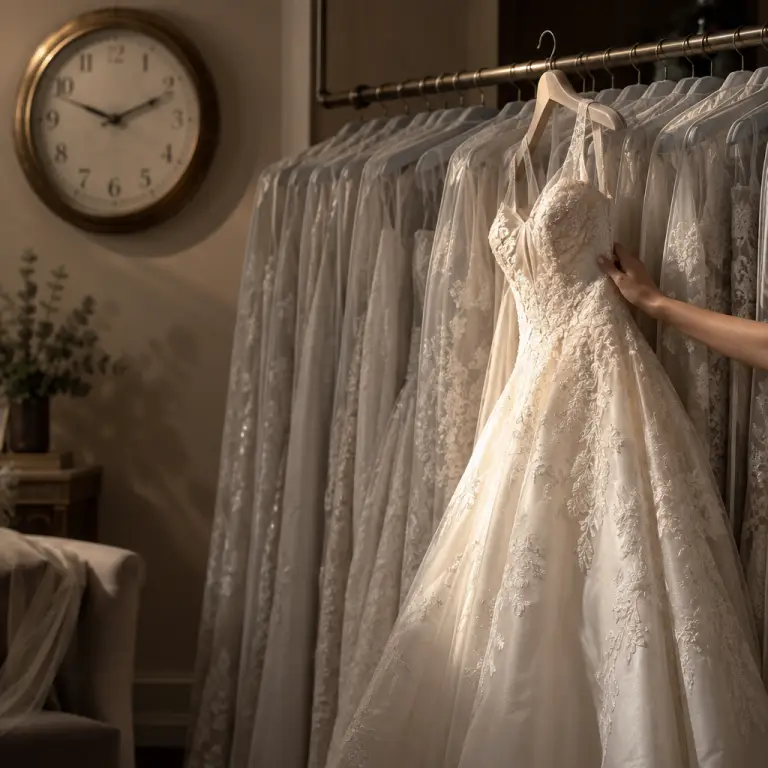
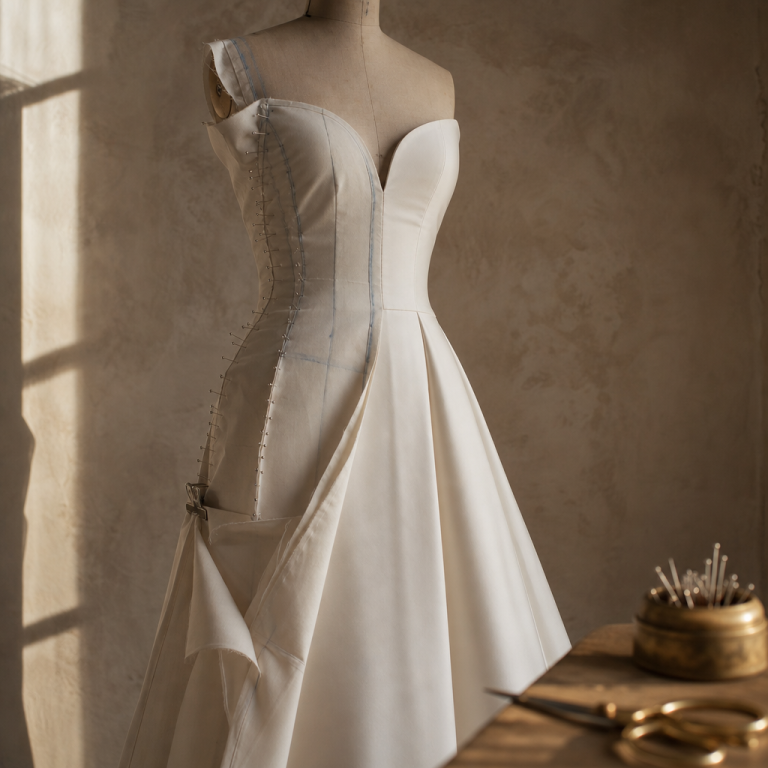
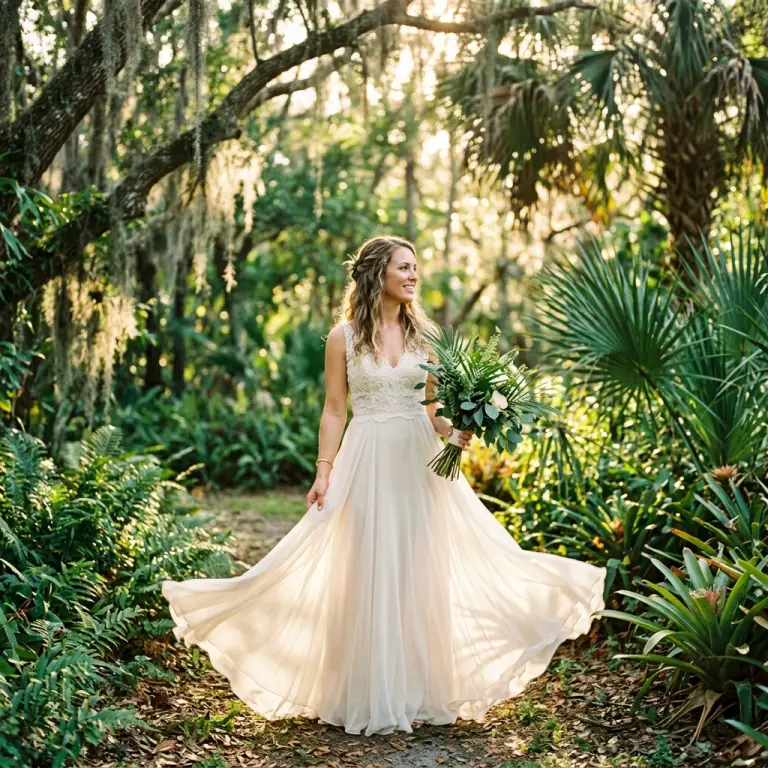
The gown you fall in love with at your appointment is not the gown you will wear down the aisle. It is close. It is the right one. But it has been pulled, clipped, and pinned at the back by a stylist who knows exactly how to make a sample look like it was made for you. Wedding dress alterations are the process that turns that illusion into reality, and they are the single most underestimated part of buying a wedding dress in Tampa Bay.
Brides budget for the gown. They research designers for months. Then a fitting appointment arrives and nobody has explained what happens next, how long it takes, or why the hem alone can take three separate sessions to get right. This guide fixes that.
What alterations actually are
Bridal gowns are not made to your measurements. They are ordered in a manufacturer’s size based on your largest measurement, which for most brides is the bust or the hips, and then they are cut down to fit everything else. That is the standard across the industry, and it is why a gown that arrives technically in your size can still feel a full size too big through the waist.
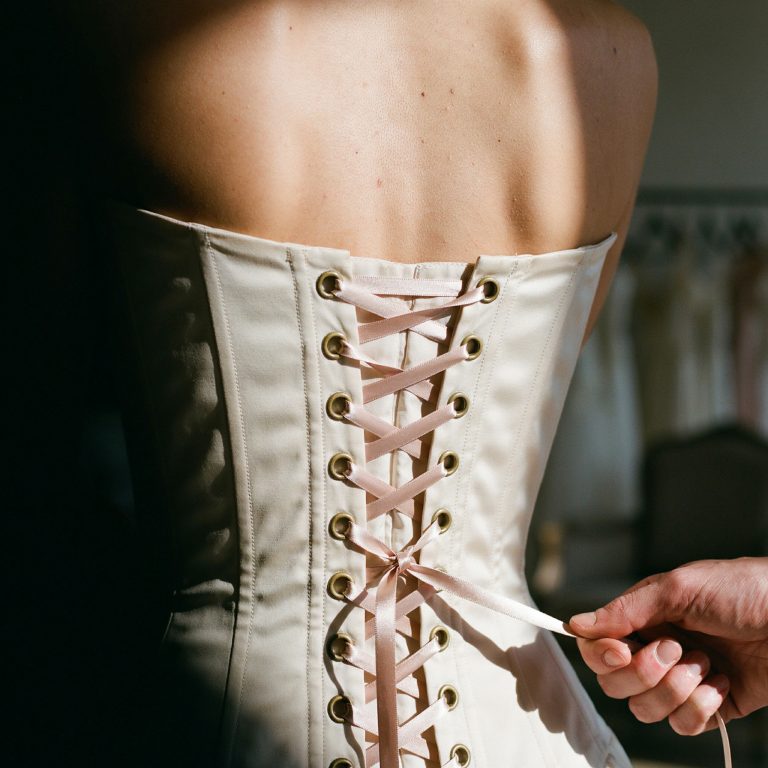
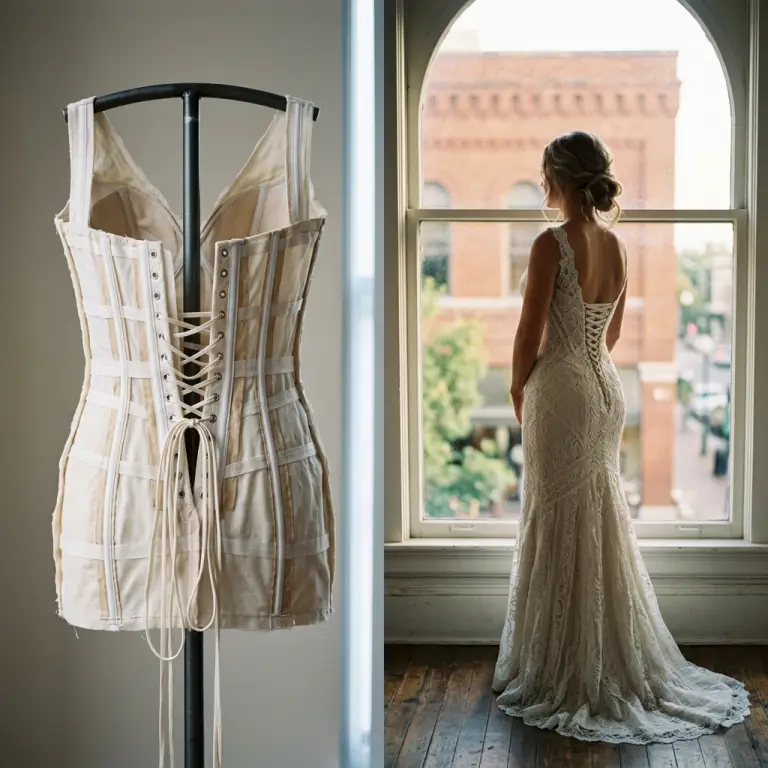
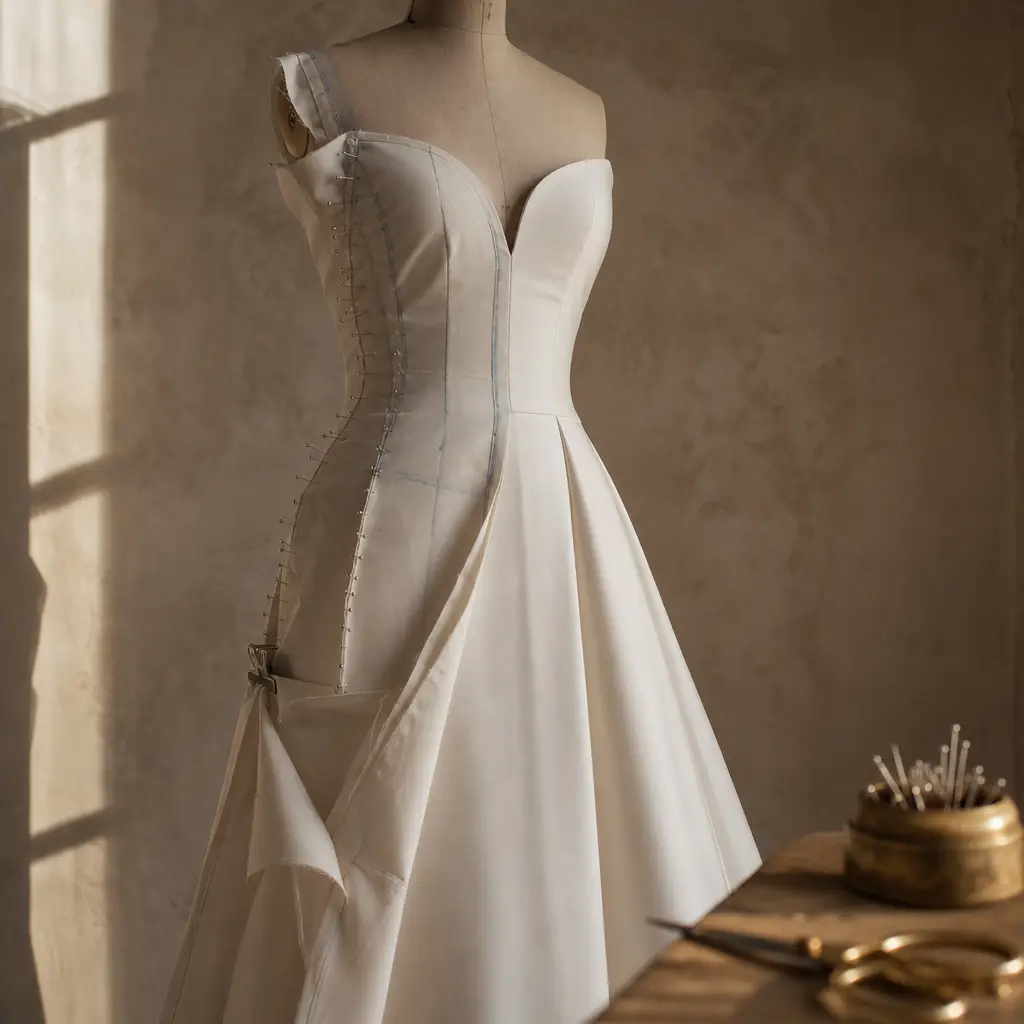
The work itself falls into a few predictable categories. The side seams and the back get taken in so the bodice sits flush against you with no gapping at the top edge. The length gets set to your shoes, which is why your shoes matter more than anyone tells you. Straps get shortened, because almost every gown is built for a torso longer than yours. A bustle gets built into the train so you can dance without carrying six feet of fabric over your arm. And where a gown has structure, the internal boning and cups get repositioned to line up with your actual body rather than the fit model’s.
None of this is optional cosmetic work. A gown that has not been altered reads as borrowed in photographs, no matter how expensive it was.
Why nearly every bride needs them
There is a persistent hope among brides that if they order the right size, they will skip this step. It almost never happens. Bridal sizing runs smaller than street sizing and it has not been updated in decades, so the number on your gown tag will not match the number in your closet. That is normal and it means nothing about your body.
Beyond sizing, the shapes are the issue. Two brides with identical measurements on paper carry those measurements differently, and a gown cut for a standard torso length will sit differently on a long waist than a short one. If you want to understand how much shape affects fit before you even shop, our guide to wedding dress silhouettes for St. Petersburg brides walks through how each shape behaves on a real body.
The only brides who regularly skip alterations are the ones who never intended to have a gown that fits properly. Do not be one of them.
The alterations timeline for a Tampa Bay wedding
Work backward from your wedding date, not forward from your order date. That single shift in thinking prevents most timeline panic.
Your gown arrives, and from there you want roughly two to three months of fitting runway. The first fitting happens about eight to ten weeks before the wedding, and this is the heavy one. This is where the gown gets pinned to your body and the plan gets made. The second fitting, about four to six weeks out, is where you see the real shape of the finished gown and adjust anything that has shifted. The final fitting sits one to two weeks out, and at that point the work should be done and you are confirming, not correcting.
Three fittings is the common rhythm. Complicated gowns need four. If your gown has heavy beadwork, a fitted lace overlay, or a corset back that has to be reset by hand, assume four and be pleasantly surprised if it takes three.
Bring your shoes to every single fitting, and bring the same shoes each time. Hem length is set from the floor to the bottom of the gown with your shoes on, and switching from a three inch heel to a flat after the hem is set means the hem comes out and goes back in. Bring your undergarments too, and any shapewear you plan to wear, because all of it changes how the bodice sits.
What actually drives the cost
Alterations are priced by the work, not by the gown. A simple hem on a lightweight chiffon skirt is a different job than a hem on a tiered tulle ballgown with horsehair braid and a beaded edge, and the price reflects that.
The factors that move the number are the number of layers in the skirt, the presence of lace or beading along any edge that has to be cut, whether the bodice is boned and lined, how many seams have to be opened to take the gown in, and what kind of bustle the train requires. A gown with an eight foot cathedral train needs a bustle with multiple attachment points, each one placed and reinforced by hand. That is skilled labor and it takes time.
Treat alterations as a real line item alongside the gown itself. At The Dressing Room our gowns run roughly from fifteen hundred to five thousand dollars, and alterations sit on top of that as separate work. Ask for your quote in writing at the first fitting, before any work begins, so there is no ambiguity later. Any reputable alterations professional will give you one without being asked twice.
The three jobs brides underestimate
The hem is the first. It looks like the simplest task in bridal alterations and it is one of the most technical, because a gown with multiple skirt layers needs each layer hemmed separately and hung to the same finished length, and a lace edge has to be cut away, reapplied, and blended so the seam disappears.
The bustle is the second. Nobody thinks about the bustle until the fitting, and then they discover that there are several different types, that the choice affects how the back of the gown looks for the entire reception, and that someone in your wedding party needs to be taught how to fasten it. Practice it at your final fitting with the person who will actually be doing it. Practice it twice.
The third is the bodice on a strapless or low back gown. Getting a strapless bodice to stay up without gripping is a matter of millimeters, and it is the difference between a bride who dances all night and one who spends the reception adjusting her neckline. This is where an experienced bridal seamstress earns her reputation, and it is why the Association of Sewing and Design Professionals publishes formal standards of quality for the trade. Fit work at this level is a craft with actual benchmarks, not a favor from someone who owns a sewing machine.
Alterations at The Dressing Room
We handle alterations in house. That matters more than it might sound like it does, because the person altering your gown works in the same building as the stylist who sold it to you and has seen that designer’s construction before. There is no handoff, no explaining your gown to a stranger, and no discovering at the second fitting that an outside seamstress has never worked with that particular lace.
It also means the fitting schedule gets built around your wedding date from the moment you order, rather than being something you go find on your own three months out. Your stylist sets it with you. If you have questions about how the process runs before you shop, our private VIP appointment is the right place to ask, because you have the whole boutique and your stylist’s full attention for the length of the appointment.
How to prepare so fittings go smoothly
Come to the first fitting at roughly the weight and shape you expect to be on the wedding day. Bodies change and that is fine, but a significant intentional change after the first fitting means the work gets redone. If you are actively changing, tell your seamstress on day one so the fittings get scheduled later rather than earlier.
Bring one person whose opinion you trust, not five. Fittings are working appointments and too many voices in the room slows the decisions down. Wear your hair roughly how you plan to wear it at the final fitting, especially if you are trying veils or a gown with a dramatic back, because the picture only comes together when all the pieces are there at once.
And say something when a thing feels wrong. Seamstresses cannot feel your gown. If the bodice pinches when you raise your arms, if the hem catches under your heel when you walk, if the straps dig, say so in the room. Every one of those is fixable while the gown is on the table and expensive to fix after you have left.
Frequently asked questions about wedding dress alterations
How long do wedding dress alterations take?
Plan for eight to twelve weeks from first fitting to finished gown. Most brides go through three fittings in that window, spaced roughly four weeks apart. Heavily beaded gowns, multi layer skirts, and complex bustles push toward four fittings. Rush work is sometimes possible but it costs more and limits what can be done well.
How much do wedding dress alterations cost?
Cost depends entirely on the work required rather than on the price of the gown. The biggest drivers are skirt layers, lace or beading along cut edges, how many seams need opening, and the complexity of the bustle. Ask for a written quote at your first fitting before any work begins so you know the number in advance.
When should I start alterations?
Roughly eight to ten weeks before the wedding for a standard gown. Order your gown six to nine months out so it arrives with that fitting window intact. Starting earlier than three months is usually counterproductive because your body may change before the wedding.
How many fittings will I need?
Three is typical. Simple gowns occasionally finish in two. Gowns with heavy embellishment, corset backs, or long trains commonly need four. Your seamstress will tell you at the first fitting which category your gown falls into.
Do I need to bring my shoes to fittings?
Yes, and bring the same pair every time. Your hem is set from the floor with your shoes on. Changing shoe height after the hem is set means the hem comes out and gets redone, which costs time and money.
What is a bustle and do I need one?
A bustle gathers and fastens your train up off the floor so you can move at the reception. Any gown with a train needs one. There are several styles, they look different from the back, and someone in your party should practice fastening yours before the wedding day.
Can a wedding dress be taken in more than one size?
Usually yes, often two sizes or more depending on construction. Letting a gown out is far harder, which is why gowns are ordered to your largest measurement and cut down from there. Beaded and lace heavy gowns have tighter limits than plain fabrics.
Will alterations ruin the beading on my gown?
No, when done by someone experienced with bridal work. Beading along a cut edge is removed by hand, the seam is closed, and the beads are reapplied so the pattern flows unbroken. It takes time, which is why beaded gowns cost more to alter.
Can I lose weight after my fittings start?
Tell your seamstress before the first fitting if you expect your body to change. Small changes are absorbed easily. Larger ones mean the gown gets re fit, and if the change happens after the final fitting there may not be time to correct it.
Do you do alterations in house at The Dressing Room?
Yes. Alterations are handled in house at our St. Petersburg boutique, by people who work with these designers and these fabrics regularly. Your fitting schedule is set with your stylist when you order, built backward from your wedding date.
Ready to find the gown worth altering
Alterations turn a beautiful gown into your gown. The work is easier, faster, and better when it starts with the right dress in the right size, chosen with a stylist who is thinking about fit from the first hanger she pulls.
Book a private appointment at our St. Petersburg boutique and the entire salon is yours. Browse our designer collections before you come, or call us at 727.323.7666 with questions about timelines and fittings.