The Gulf Coast of Florida offers some of the most stunning beach wedding settings in the country, from the pristine white sands of Clearwater Beach to the charming shores of St. Pete Beach and the secluded beauty of Pass-a-Grille. If you’re planning a Tampa Bay beach wedding, finding the perfect dress means understanding how to balance style, comfort, and practicality for a ceremony where sand, surf, and Florida sunshine are part of your backdrop. Let’s talk about everything you need to know about choosing a beach wedding dress in the St. Petersburg area.
Beach wedding dresses require different considerations than traditional ballroom or indoor venue gowns. When you’re getting married with the Gulf of Mexico as your backdrop, your dress needs to work with the elements rather than against them. The combination of sand, wind, humidity, and the casual-yet-romantic vibe of a beach ceremony influences everything from fabric choices to silhouette selection to the overall construction of your gown.
The first consideration for any Tampa Bay beach wedding dress is fabric. Heavy, structured fabrics like mikado, taffeta, or heavily beaded satin simply don’t work well on the beach. These fabrics trap heat in Florida’s humidity, they’re difficult to move in on sand, and they can feel incongruous with the relaxed beach atmosphere. Instead, you’ll want to focus on lightweight, breathable fabrics that move beautifully in the coastal breeze and photograph gorgeously in natural light.
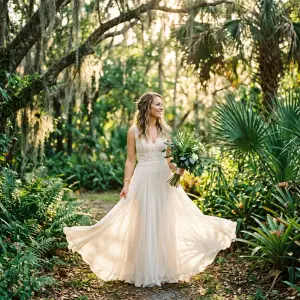
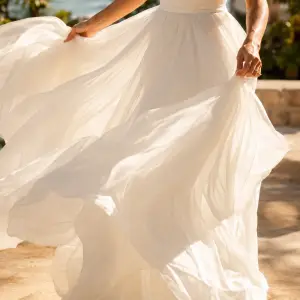
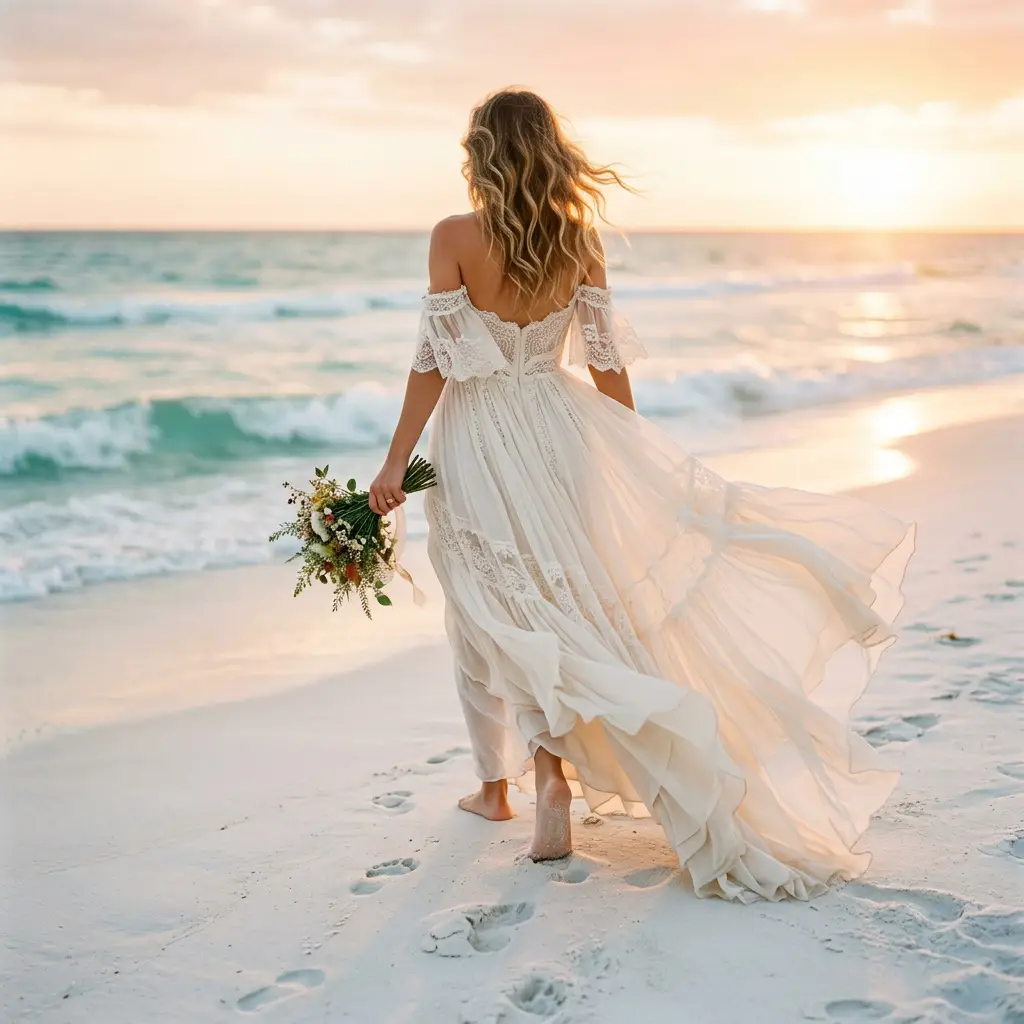
Chiffon is one of the most popular choices for beach wedding dresses, and for good reason. This lightweight, flowing fabric creates beautiful movement in the breeze, it’s comfortable in heat, and it photographs dreamily against beach backgrounds. Chiffon drapes elegantly, creates soft romantic lines, and comes in various weights from ultra-sheer to more substantial versions. Many beach brides love chiffon A-line or sheath dresses that skim the body without clinging uncomfortably in humidity.
Organza offers similar benefits to chiffon but with slightly more structure. It’s still lightweight and breathable, but it holds its shape a bit better, which can be beautiful for dresses with more defined silhouettes. Organza works particularly well for beach wedding dresses with delicate details like ruffles, tiers, or subtle volume that needs to maintain shape without heavy structure.
Crepe has become increasingly popular for beach weddings because it offers the best of both worlds—it’s lightweight and comfortable in heat, but it creates clean, modern lines rather than ethereal flowing. Crepe skims the body beautifully, it doesn’t wrinkle easily (crucial when you’re sitting on beach blankets or in golf carts), and it photographs gorgeously with its subtle matte finish. For brides who want a more contemporary or minimalist beach wedding look, crepe is often the perfect choice.
Lace is absolutely an option for beach weddings, but the key is choosing the right type of lace and the right construction. Heavy, structured lace with thick backing won’t work well on the beach. Instead, look for lightweight lace that’s airy and breathable—think Chantilly lace or Venice lace that’s delicate and allows air to flow through. Lace can be stunning as an overlay on chiffon or as strategic details rather than covering the entire dress. According to Brides magazine’s beach wedding dress guide, lightweight lace combined with flowing fabrics creates the perfect romantic beach aesthetic.
Silhouette choice significantly impacts how comfortable and appropriate your dress feels for a beach ceremony. Ballgowns, while beautiful, are generally impractical for beach weddings. The full skirts collect sand, they’re difficult to walk in on uneven surfaces, and they can feel overly formal for a beach setting. That said, if you’ve always dreamed of a ballgown and you’re having a beach ceremony, you absolutely can—just understand the practical challenges you’ll face.
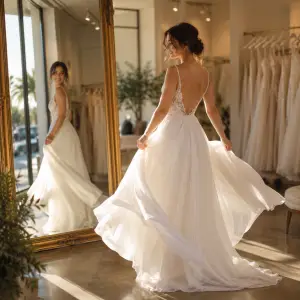
A-line silhouettes are perhaps the most universally perfect choice for beach weddings. The fitted bodice and gently flaring skirt create a classic, elegant shape that works beautifully on sand. A-line dresses in lightweight fabrics like chiffon or organza are easy to walk in, they don’t collect excessive sand, and they create beautiful movement in the breeze. When you book your appointment at The Dressing Room on Central Avenue in St. Petersburg, A-line gowns are often the first style we’ll show beach brides because they’re so versatile and flattering.
Sheath or column dresses are excellent for beach weddings, particularly for brides who want a more minimalist or modern aesthetic. These slim, body-skimming silhouettes work beautifully in crepe or silk, they’re comfortable and easy to move in, and they create clean, elegant lines in photographs. Sheath dresses are particularly popular for more intimate beach ceremonies or for brides who want sophistication without fuss.
Fit-and-flare or mermaid silhouettes can work for beach weddings, but they require careful consideration. In lightweight fabrics, these styles can be stunning and romantic. However, the fitted construction through the hips can make walking on sand more challenging, and you’ll want to ensure the dress has enough give in the skirt to allow comfortable movement. If you love this silhouette, try it on and actually walk around, sit down, and move naturally to ensure it works for a beach setting.
Empire waist dresses, with their high waistline just under the bust and flowing skirt, are wonderfully romantic for beach weddings. This silhouette works particularly well on petite brides and creates a soft, ethereal look that’s perfect for seaside ceremonies. Empire waist dresses in flowing chiffon or organza are comfortable, forgiving, and beautifully romantic.
Train length is a crucial consideration for beach weddings. Long cathedral trains dragging through sand become heavy, dirty, and damaged quickly. For beach ceremonies, most brides opt for sweep trains (barely touching the ground) or no train at all. If you love the look of a train for photographs, consider a detachable train that you can remove for the ceremony and add back for portraits in areas away from the sand.
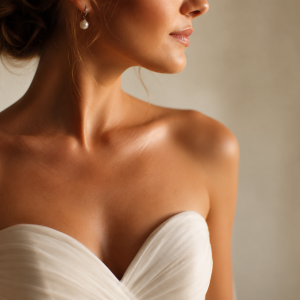
Neckline and sleeve choices for beach wedding dresses should balance coverage with heat management. Strapless dresses are popular for beach weddings because they allow maximum sun exposure and create a summery vibe, but they’re not for everyone. If you’re uncomfortable going strapless, spaghetti straps, halter necklines, or delicate cap sleeves all work beautifully for beach settings.
Off-the-shoulder necklines have become incredibly popular for beach weddings because they strike the perfect balance—romantic, feminine, and photograph-worthy while still being comfortable. However, be aware that off-the-shoulder sleeves can create tan lines if you’re planning beach time before your wedding. Some brides love the look enough to work around it, while others prefer strapless or thin straps for even tanning.
Illusion necklines with delicate lace or mesh can be stunning for beach weddings, offering coverage from the sun while maintaining an airy, romantic feeling. High necklines might seem counterintuitive for beach settings, but when done in sheer fabrics with lace details, they can be unexpectedly perfect for brides who want something unique.
Sleeve length for beach weddings is typically short or nonexistent, but there are exceptions. Flutter sleeves, cap sleeves, or delicate off-the-shoulder sleeves add romance without adding heat. Long sleeves are generally too warm for Florida beach weddings unless they’re made from very sheer fabric or lace. Three-quarter sleeves can work in lightweight fabrics for ceremonies during cooler months like January or February when beach weather is still beautiful but less intensely hot.
Embellishments and details on beach wedding dresses should enhance rather than overpower. Heavy beading adds weight and can be uncomfortable in heat and humidity. Instead, look for dresses with delicate details—subtle embroidery, lightweight appliqués, or strategic beading that adds interest without bulk. Many beautiful beach wedding dresses feature almost no embellishment at all, relying on beautiful fabrics and flattering cuts to create impact.
Color considerations for beach wedding dresses extend beyond traditional white. While classic white or ivory work beautifully on the beach, many brides opt for softer shades that complement the coastal setting—champagne, blush, soft gold, or even pale blue can be stunning against sand and sea. The designers we carry at The Dressing Room, including Maggie Sottero, Essense of Australia, and Stella York, offer beach-appropriate gowns in various shades that photograph gorgeously in Gulf Coast lighting.
Practical considerations for beach wedding dresses include how you’ll get to the ceremony location, how you’ll navigate sand, and what happens if weather doesn’t cooperate. Most Tampa Bay beach venues have designated ceremony areas with some level of accessibility, but you’ll likely still be walking on sand at some point. Consider whether you need a dress that’s short enough to avoid dragging, or whether you’re comfortable bustling or holding up your dress as you walk.
Undergarments for beach wedding dresses require special consideration. The built-in support in wedding dresses means you won’t need a bra, which is particularly welcome in beach heat. However, you might want to consider seamless underwear in nude tones to avoid visible lines in clingy fabrics or if photos will be backlit by the bright Gulf Coast sun. Shapewear is typically unnecessary for beach weddings—the relaxed vibe and flowing fabrics make structured undergarments feel incongruous.
Shoes for beach weddings are a frequent question, and the answer is simple: most brides go barefoot or wear flat sandals. Heels sink into sand and are impractical for beach walking. If you want some height, wedge sandals work better than traditional heels, though many brides find barefoot most comfortable and authentic for a beach ceremony. If you’re trying on dresses at our St. Petersburg location, bring flat sandals or plan to try dresses barefoot so you can see accurate hem length.
Hair and makeup considerations tie directly into your dress choice. Beach ceremonies mean wind, humidity, and potentially ocean spray. Loose, flowing hair complements beach wedding dresses beautifully, but it will blow around in the breeze. Many beach brides opt for soft updos, half-up styles, or loose waves pinned back enough to stay out of their face. Your hairstyle choice might influence your neckline preference—elaborate updos showcase beautiful back details or statement necklines, while flowing hair works well with simpler necklines.
Veil choices for beach weddings lean toward shorter, simpler styles. Long cathedral veils are impractical on the beach—they blow in the wind, collect sand, and can become unmanageable. Fingertip-length veils, elbow-length veils, or even birdcage veils work beautifully for beach settings. Many beach brides skip veils entirely in favor of floral crowns, delicate hairpins, or simply wearing their hair naturally adorned.
Timing your beach ceremony affects dress comfort significantly. Morning ceremonies (before 10 AM) or late afternoon ceremonies (after 4 PM) are most comfortable in Florida’s heat. Midday beach weddings during summer months can be brutally hot, and even the most lightweight dress will feel warm. If you’re planning a midday ceremony, ensure your dress is the absolute lightest, most breathable option possible.
Seasonal considerations for Tampa Bay beach weddings mean different comfort levels throughout the year. November through April offers the most pleasant beach weather with lower humidity and comfortable temperatures—during these months, you have more flexibility with fabric choices and can even consider slightly less lightweight options. May through October brings intense heat and humidity—during these months, the lightest, most breathable fabrics are essential for comfort.
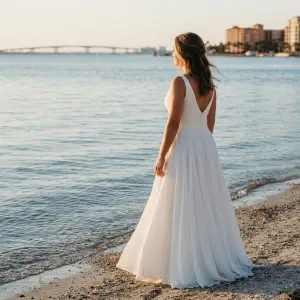
Photography considerations for beach wedding dresses include how the dress photographs in bright sunlight, whether it creates beautiful movement in the breeze, and how it appears against sand and sea backgrounds. Flowing fabrics photograph dramatically in wind, creating those gorgeous billowing-dress-in-the-breeze shots that beach weddings are known for. Pure white can sometimes wash out in bright beach sunlight, which is why many photographers recommend softer tones like ivory or champagne for beach settings.
Budget considerations for beach wedding dresses can actually work in your favor. Beach-appropriate dresses often feature simpler construction, less embellishment, and lighter fabrics, which can mean lower price points than heavily structured ballgowns. The designers we carry at The Dressing Room offer stunning beach-appropriate options across various price ranges, from $1,500 to $5,000 and beyond, ensuring you can find something beautiful within your budget.
Shopping for a beach wedding dress at The Dressing Room on Central Avenue means working with consultants who understand Tampa Bay beach venues and what works in our specific coastal climate. We know the challenges of Gulf Coast humidity, we understand the vibe of local beach venues from Pass-a-Grille to Clearwater Beach, and we can help you find a dress that’s both beautiful and practical for your specific ceremony location.
Plus-size brides shopping for beach wedding dresses should know that lightweight, flowing fabrics work beautifully on all body types up to size 28. A-line silhouettes in chiffon, empire waist dresses, and fit-and-flare styles in crepe all flatter curves while keeping you comfortable on the beach. The VIP private appointment experience at our boutique means you can try on beach-appropriate styles in a comfortable, private setting where you can really evaluate how each dress feels and moves.
Destination guests traveling to your Tampa Bay beach wedding will appreciate seeing you in a dress that feels authentic to the setting. There’s something wonderfully cohesive about a bride in a flowing, romantic beach dress standing on Gulf Coast sand—it creates a complete aesthetic that feels intentional and beautiful rather than like you transported a traditional ballroom wedding to an outdoor setting.
Alternative beach wedding dress options include shorter lengths, which can be stunning for beach ceremonies. Tea-length dresses (hitting mid-calf) or knee-length dresses eliminate concerns about sand and create a playful, vintage-inspired look. These shorter styles work particularly well for casual beach weddings or intimate elopements. Two-piece wedding dresses—separates with a crop top or fitted top and flowing skirt—offer a modern, bohemian vibe perfect for beach settings.
Casual versus formal beach weddings require different dress approaches. A sunset ceremony with 150 guests at a resort beach venue calls for a more formal beach dress—perhaps a flowing A-line in silk chiffon with delicate details. An intimate morning ceremony with twenty people on a secluded beach allows for something more casual—maybe a simple sheath in crepe or even a shorter dress. Your venue formality and guest count should guide your dress formality.
Backup plans for weather should influence your dress choice slightly. Tampa Bay beaches can experience sudden rain showers, particularly during summer months. If your ceremony is during rainy season, ensure your dress is something you’d be comfortable moving quickly in if you need to relocate, and consider fabrics that won’t be ruined if they get slightly damp.
Post-ceremony considerations include whether you want to wear your dress to your reception or change into something different. Many beach brides wear their ceremony dress to cocktail hour and then change into a shorter, party-friendly dress for reception dancing. If you’re planning to wear your dress all evening, ensure it’s comfortable enough for hours of wearing, sitting, and dancing.
Finding the perfect beach wedding dress for your Tampa Bay celebration means balancing romance with practicality, style with comfort, and your personal vision with the realities of a coastal ceremony. When you visit The Dressing Room on Central Avenue in St. Petersburg, we’ll help you navigate these decisions to find a dress that makes you feel beautiful, confident, and perfectly suited to your Gulf Coast beach wedding.
FREQUENTLY ASKED QUESTIONS
What type of wedding dress is best for a beach wedding in St. Petersburg?
Lightweight, flowing dresses in fabrics like chiffon, organza, or crepe work best for Tampa Bay beach weddings. A-line and sheath silhouettes are most practical, allowing easy movement on sand while remaining comfortable in Florida’s heat and humidity. Avoid heavy ballgowns with excessive structure or beading that will be uncomfortable in coastal conditions.
Should I wear a long or short wedding dress for a Clearwater Beach ceremony?
Long dresses work beautifully for beach weddings as long as they’re lightweight fabrics without excessive trains. Sweep trains or no train at all are most practical for sand. However, tea-length or knee-length dresses can be stunning and offer more freedom of movement. The choice depends on your venue formality and personal preference.
Can I wear a traditional white wedding dress on the beach, or should I choose a different color?
Traditional white absolutely works for beach weddings. However, softer shades like ivory, champagne, or blush often photograph more beautifully in bright beach sunlight and complement the coastal setting. Many Tampa Bay beach brides choose off-white tones that won’t wash out in intense Gulf Coast sunshine.
What shoes should I wear with a beach wedding dress in Florida?
Most beach brides go barefoot or wear flat sandals for beach ceremonies. Heels sink into sand and are impractical. If you want some height, wedge sandals work better than traditional heels. When trying on dresses, wear flat sandals or go barefoot to see accurate hem length for beach settings.
How do I keep my beach wedding dress from getting sandy and dirty?
Choose dresses with sweep trains or no train at all to minimize sand contact. Have someone help you hold or bustle your dress when walking to the ceremony location. Consider having your ceremony on a designated ceremony area with some ground covering rather than directly on sand. Accept that some sand is inevitable and embrace it as part of the beach wedding experience.
What fabrics should I avoid for a Tampa Bay beach wedding?
Avoid heavy fabrics like mikado, taffeta, thick satin, or heavily beaded materials. These trap heat, feel uncomfortable in humidity, and are difficult to move in on sand. Also avoid dresses with thick underlayers or heavy structure that will make you overheat in Florida’s coastal climate.
Do I need a special bra or undergarments for a beach wedding dress?
Wedding dresses have built-in support, so you won’t need a bra even for beach styles. Seamless nude underwear is recommended to avoid visible lines in clingy fabrics or backlit photos. Shapewear is typically unnecessary for beach weddings—the relaxed setting and flowing fabrics make structured undergarments feel out of place.
How far in advance should I shop for a beach wedding dress in St. Petersburg?
Follow the same 9-12 month timeline as any wedding dress. Beach dresses still require ordering from designers (6-9 months) plus alterations time (2-3 months). Don’t assume beach dresses are faster to acquire—they go through the same custom ordering process as traditional wedding gowns.
Can plus-size brides wear beach wedding dresses comfortably?
Absolutely. Lightweight, flowing fabrics like chiffon work beautifully on all body types up to size 28. A-line silhouettes, empire waist styles, and fit-and-flare dresses in crepe all flatter curves while keeping you comfortable on the beach. The designers at The Dressing Room offer beach-appropriate options in all sizes.
Should I get a separate dress for beach photos if my ceremony isn’t on the beach?
Many Tampa Bay brides do engagement photos or day-after sessions on the beach even if their ceremony is elsewhere. If you love beach photos but aren’t having a beach ceremony, you could consider a separate dress for photos. However, many ceremony dresses work beautifully for beach portraits if styled appropriately.